
What does a person with geographic atrophy see? At first, the changes may be subtle. Reading in dim light might become harder, colors may look less vivid, or small details may seem blurry. Over time, dark or blank spots can develop in the center of vision, making everyday activities more difficult.
Geographic atrophy (GA) is an advanced form of dry age-related macular degeneration (AMD). It develops gradually. As retinal damage spreads, eyesight can suffer. Patients can identify symptoms and seek treatment by understanding these changes.
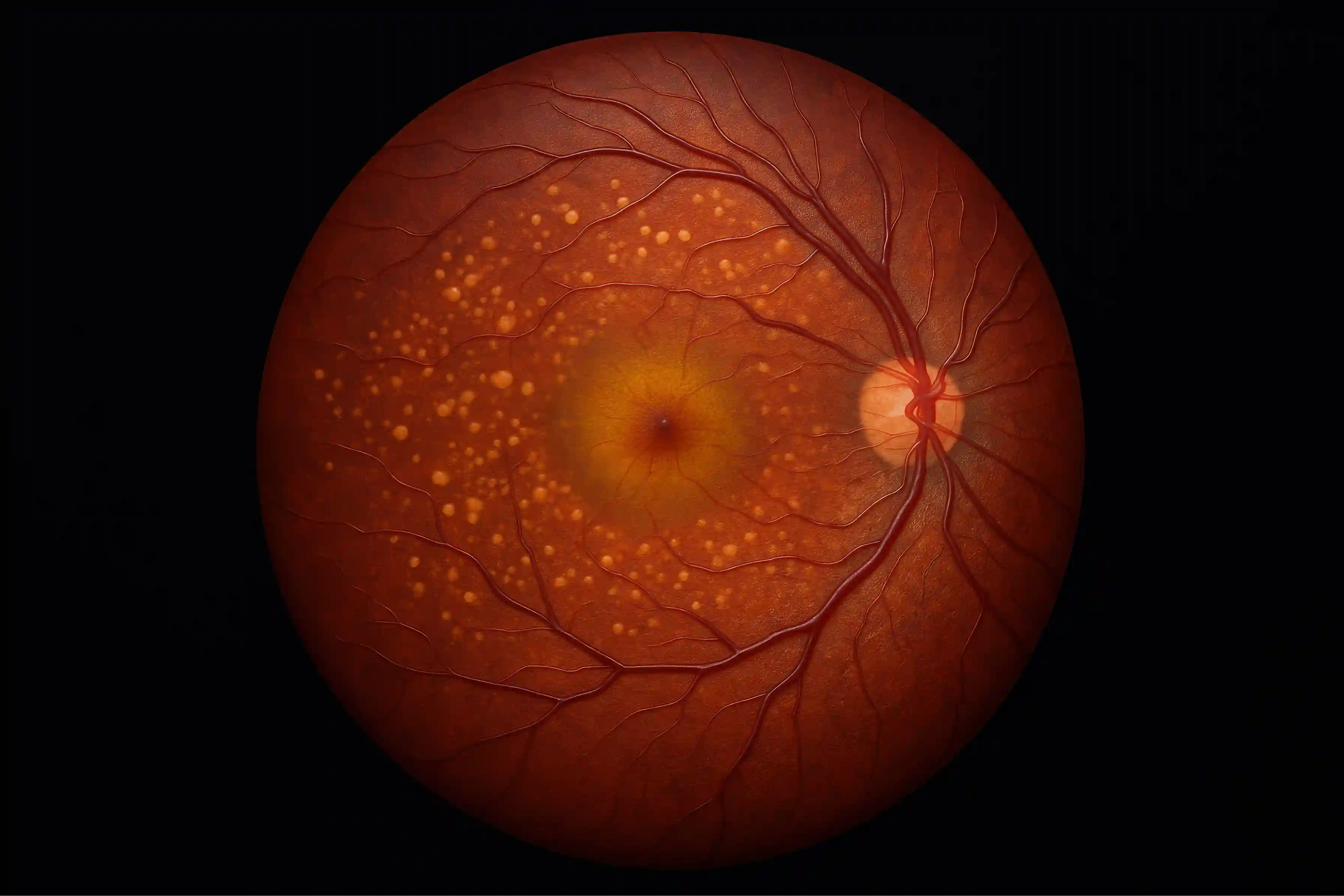
What Does Vision Look Like With Geographic Atrophy?
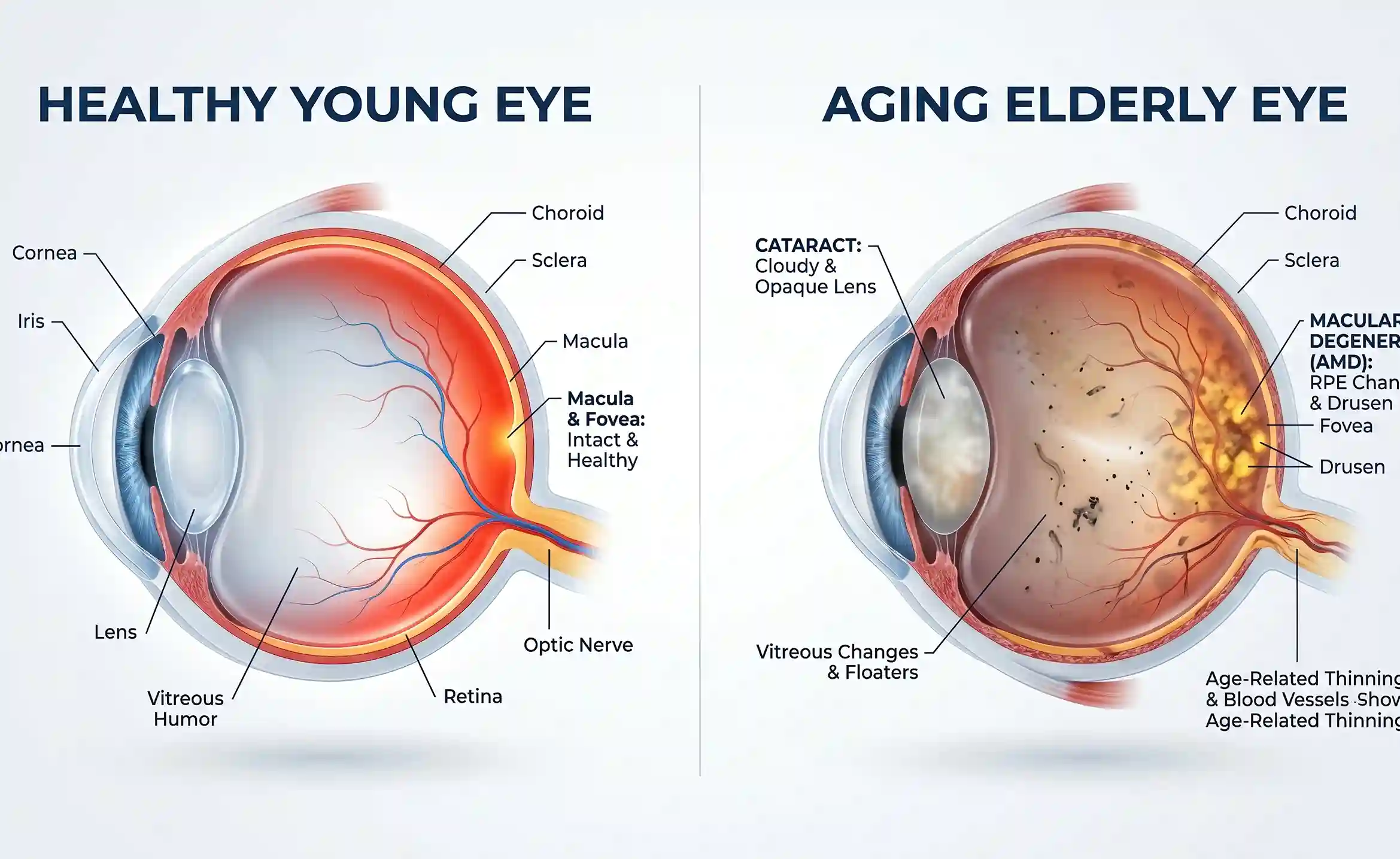
Geographic atrophy affects the macula, the central part of the retina responsible for detailed vision. As light-sensitive cells in this area are damaged, the brain gets less visual information.
What a person sees depends on where the damage occurs and how far it has progressed.
Common vision changes include:
- Blurred central vision: Words, faces, and fine details may become harder to see clearly.
- Dark or blank spots: Missing areas may appear in the center of the visual field.
- Difficulty reading: Letters may seem faded, incomplete, or difficult to distinguish.
- Reduced contrast: Objects may blend into their backgrounds, especially in poor lighting.
- Trouble seeing in dim light: Reading menus, finding objects, or moving around in darker rooms may become more difficult.
- Less vivid colors: Colors may appear duller than they once did.
These changes do not necessarily happen all at once. Some people retain useful central vision for years, while others experience more noticeable difficulties as the affected areas grow.
What Is GA Eye Disease?
Geographic atrophy is an advanced stage of dry AMD in which areas of the retina gradually lose important cells, including the retinal pigment epithelium and photoreceptors.
The retinal pigment epithelium supports the health of the light-sensitive cells. When these structures deteriorate, the affected areas can no longer process visual information normally.
The term geographic atrophy refers to the irregular patches of retinal tissue loss that can resemble areas on a map when viewed during an eye examination.
GA usually affects central vision because it involves the macula. Peripheral vision is often preserved, although the impact on daily activities can still be substantial.
What Causes Geographic Atrophy?
The exact cause of geographic atrophy is complex. It develops as part of AMD, involving age-related damage to retinal cells and several biological processes that contribute to their deterioration.
Factors associated with a higher risk include:
- Increasing age
- A family history of AMD
- Certain genetic factors
- Smoking history
Inflammatory activity involving the immune system's complement pathway also plays a role in GA. This pathway is one target of newer treatments designed to slow disease progression.
Geographic atrophy does not develop at the same rate in everyone.
The location of the damaged area, whether it involves the very center of the macula, and how quickly it expands can all affect vision.
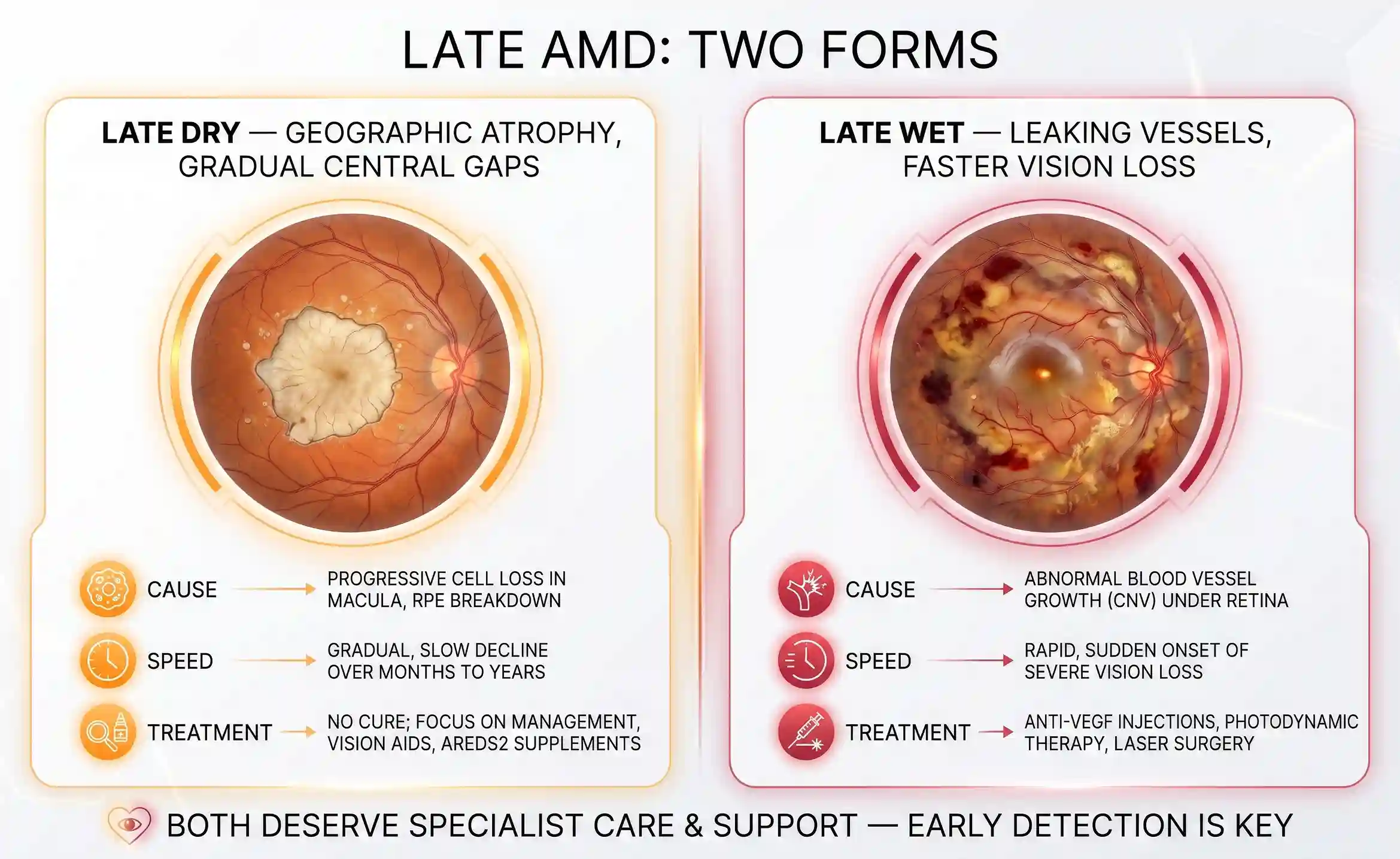
Geographic Atrophy vs. Macular Degeneration: What's the Difference?
Geographic atrophy and macular degeneration are closely related, but they do not mean exactly the same thing.
Age-related macular degeneration is a broader condition that affects the macula. It includes dry and wet forms and can progress through different stages.
Geographic atrophy is a form of advanced dry AMD. It involves the gradual loss of retinal cells in specific areas of the macula.
Wet AMD, by comparison, involves abnormal blood vessels growing beneath or within the retina. These vessels can leak fluid or blood and cause changes in vision.
A person with geographic atrophy may also develop wet AMD, so new or sudden visual changes should be assessed rather than assumed to be part of the existing condition.
Does Geographic Atrophy Cause Total Blindness?
Geographic atrophy can cause substantial and permanent loss of central vision, particularly when the damaged areas expand into the center of the macula or affect both eyes.
However, geographic atrophy does not usually cause complete blindness. Peripheral vision often remains, even when central vision becomes severely impaired.
The practical effects can still be significant. Reading, recognizing faces, using a phone, preparing meals, and driving may become increasingly difficult.
The degree of vision loss varies. Some people retain useful central vision for a long time, while others develop larger blind spots.
Regular retinal monitoring helps track changes and guide decisions about treatment and visual support.
How Is Geographic Atrophy Diagnosed?
A retina specialist evaluates the retina and macula to determine whether geographic atrophy is present and how much it has progressed.
The assessment may include:
- Dilated retinal examination: Allows the specialist to examine the retina for signs of damage.
- Optical coherence tomography (OCT): Produces detailed cross-sectional images of the retina.
- Fundus autofluorescence imaging: Helps identify and monitor areas of retinal pigment epithelium damage.
- Vision assessment: Evaluates how the condition affects central vision and daily visual tasks.
These findings help determine whether monitoring, treatment, or additional support for vision-related activities may be appropriate.
Why Choose Dr. Paul Hahn at phRETINA?
Dr. Paul Hahn, MD, PhD, FASRS, is a board-certified, fellowship-trained retina specialist with extensive experience in retinal and macular care.
He has led more than 30 clinical trials and has over 100 publications in retinal disease treatment.
At phRETINA in Nanuet, NY, Dr. Hahn combines retinal imaging with evidence-based treatment and personalized care.
The practice serves patients throughout Rockland County, Bergen County, NJ, and nearby communities in Westchester County, NY.
Conclusion
Geographic atrophy can gradually change how a person sees, from difficulty reading in dim light to blurred central vision and blank spots.
Although the condition can lead to significant vision loss, it does not usually eliminate all sight.
Diagnosis and regular monitoring help clarify how the disease is progressing and whether treatments to slow its expansion may be appropriate.
If central vision is changing, a retinal evaluation can help identify the cause and guide the next steps.
Schedule a complete retinal evaluation today.
Frequently Asked Questions
-
What does a person with geographic atrophy see?
A person may notice blurry central vision, dark or blank spots, reduced contrast, faded colors, and difficulty reading or seeing in dim light. Symptoms depend on the location and extent of retinal damage. -
What are the early symptoms of geographic atrophy?
Early changes may include needing brighter light to read, difficulty seeing details, and trouble adjusting to dim lighting. Some people notice few symptoms until the affected area expands. -
Does geographic atrophy cause total blindness?
It can cause severe central vision loss, but peripheral vision often remains. The impact varies depending on how much of the macula is affected and whether one or both eyes are involved. -
Can geographic atrophy be cured?
There is currently no cure that reverses the retinal damage. Treatment may slow progression in eligible patients, while monitoring and low-vision support can help patients manage changes in daily vision.