
Age-related macular degeneration (AMD) is a leading cause of vision loss among older adults. While the dry form develops gradually, wet age-related macular degeneration (wet AMD) can progress much more quickly and may lead to permanent vision loss if left untreated.
Knowing first signs of wet macular degeneration can help you recognize changes in your vision early and seek timely care.
Advances in retinal imaging and treatment have made it possible to preserve vision for many patients, particularly when the condition is diagnosed before significant damage occurs.
What Is Wet AMD?
Before understanding the First Signs of Wet Macular Degeneration, it's important to know what is wet AMD of the eye.
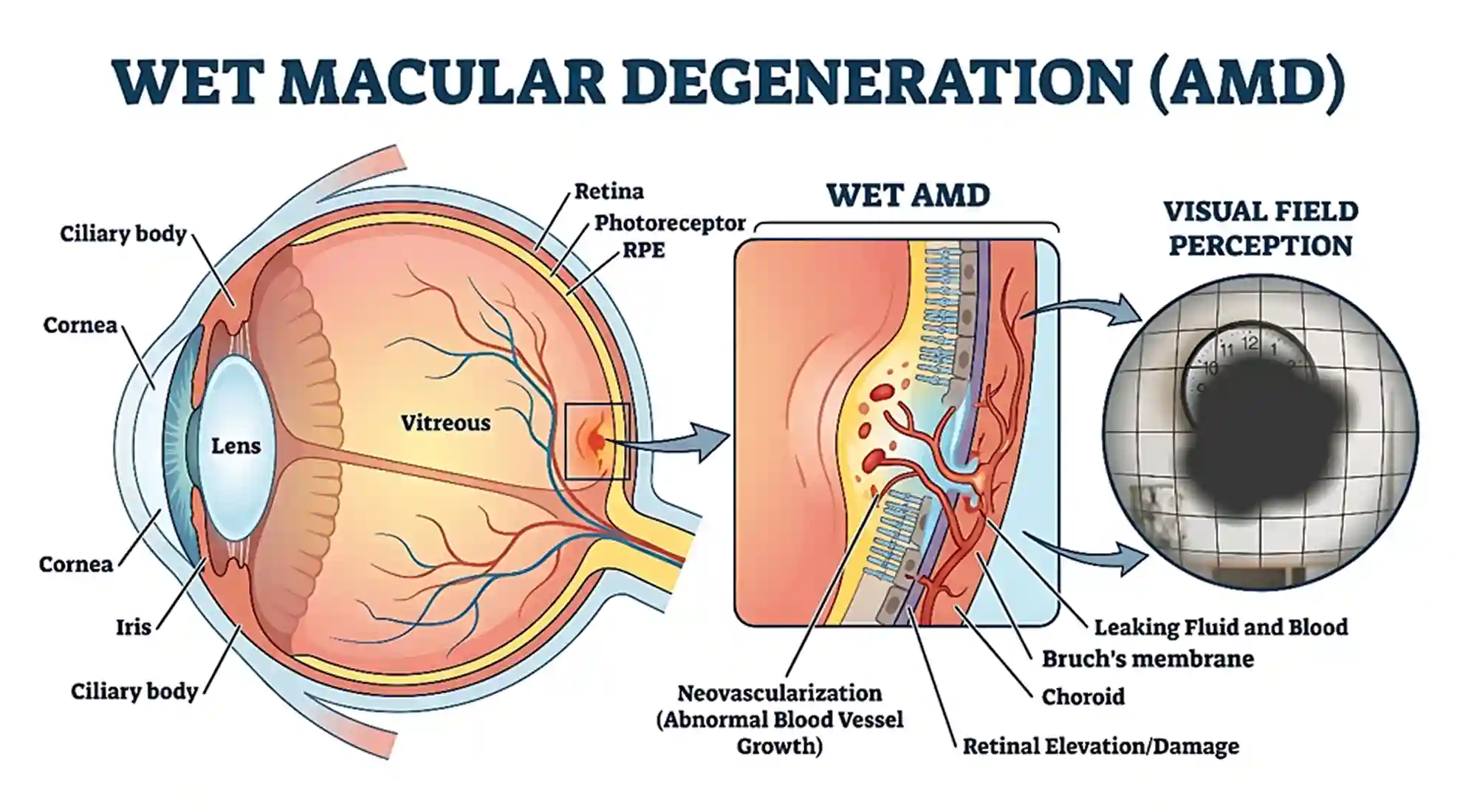
Wet AMD is an advanced form of age-related macular degeneration in which abnormal blood vessels grow beneath the macula, the part of the retina responsible for sharp central vision.
These fragile blood vessels can leak blood or fluid behind the retina, causing swelling and damage that affects activities such as reading, driving, and recognizing faces.
Although wet AMD is less common than dry AMD, it accounts for most cases of severe vision loss related to macular degeneration.
What Are the First Signs of Wet Macular Degeneration?
Early symptoms usually impact central vision and can worsen rapidly, so schedule an eye exam if you notice any changes.
Straight Lines Appear Wavy
A common early symptom is seeing straight lines as bent or distorted due to changes in the macula's shape from leaking blood vessels.
Blurred Central Vision
Even with glasses, objects in front may look blurry, making it harder to read fine print or recognize faces.
Dark or Blank Spots
Some people develop a gray or dark spot in the center of their vision. This blind spot may gradually enlarge if the condition progresses.
Colors Appear Less Vivid
Damage to the macula can make colors appear dull or faded compared to normal.
Sudden Changes in Vision
Unlike dry AMD, wet AMD may develop quickly. Any sudden distortion or decrease in central vision should never be ignored.
What Are the Symptoms of Wet AMD?
Many patients ask, what are the symptoms of wet AMD or what is wet AMD symptoms when they first notice changes in their vision.
Common symptoms include:
- Blurred central vision
- Wavy or distorted lines
- Dark or blank spots in the center of vision
- Difficulty reading
- Trouble recognizing faces
- Reduced contrast and color perception
- Sudden changes in visual clarity
These wet AMD eyes symptoms typically affect central vision while peripheral vision remains relatively unaffected during the early stages.
What Causes Wet AMD?
Wet AMD develops when abnormal blood vessels grow beneath the retina and leak blood or fluid. This leakage damages the macula and interferes with normal vision.
Several factors may increase the risk of developing wet AMD, including:
- Increasing age
- Family history of AMD
- Smoking
- High blood pressure
- Cardiovascular disease
- Obesity
- Existing dry AMD
Not everyone with these risk factors will develop wet AMD, but they may increase the likelihood of disease progression.
Difference Between Wet and Dry AMD
Understanding the difference between wet and dry AMD can help patients recognize why prompt treatment is so important.
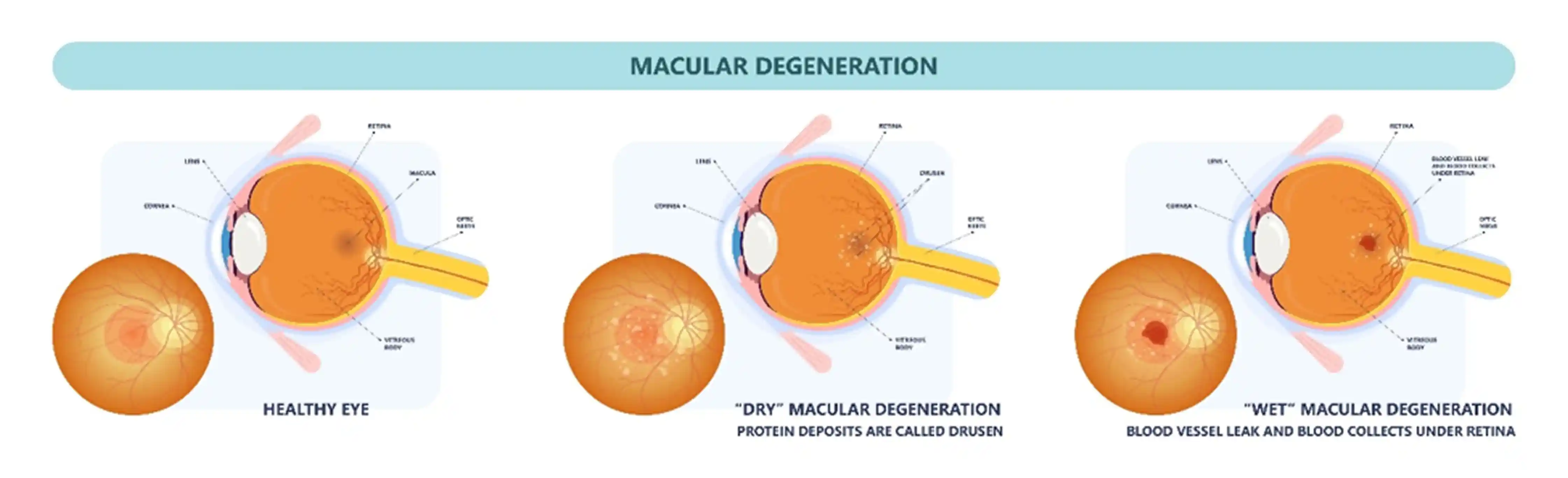
Dry AMD is more common and develops slowly as the macula thins, while wet AMD occurs when abnormal blood vessels under the retina leak blood or fluid.
The Main Differences Include:
| Dry AMD | Wet AMD |
|---|---|
| Progresses slowly | Can progress rapidly |
| Caused by retinal thinning and drusen | Caused by abnormal leaking blood vessels |
| Usually gradual vision loss | May cause sudden central vision changes |
| May progress over years | Requires prompt treatment |
Understanding age related macular degeneration wet and dry helps patients appreciate why routine monitoring is important, especially if they have already been diagnosed with dry AMD.
Why Does Fluid Behind the Retina Matter?
One of the defining features of wet AMD is the presence of fluid behind the retina. This occurs when newly formed blood vessels leak beneath the macula.
Common fluid behind eye symptoms may include blurred vision, distorted images, or dark areas in the center of your vision.
Retina specialists use advanced imaging, such as Optical Coherence Tomography (OCT), to detect retinal fluid and monitor treatment over time.
How Is Wet AMD Diagnosed?
Early diagnosis is essential because treatment is most effective before permanent retinal damage occurs.
Your retina specialist may recommend:
Comprehensive Dilated Eye Examination
A detailed retinal examination allows your physician to evaluate the macula for signs of bleeding, swelling, or abnormal blood vessels.
Optical Coherence Tomography (OCT)
OCT creates detailed cross-sectional images of the retina and helps detect fluid, swelling, and structural changes that may not be visible during a standard examination.
Fluorescein Angiography
In some cases, a special dye test may be performed to identify leaking blood vessels beneath the retina.
Treatment for Wet AMD
Although there is currently no cure for wet AMD eye disease, effective treatments can slow disease progression and help preserve vision.
The most common treatment is anti-VEGF therapy, which involves injections that reduce abnormal blood vessel growth and leakage beneath the retina. Many patients require ongoing monitoring and periodic treatment to maintain the best possible visual outcomes.
Early diagnosis remains one of the most important factors in successful treatment.
When Should You See a Retina Specialist?
You should seek prompt evaluation if you experience:
- New blurred central vision
- Wavy or distorted lines
- Dark spots in your vision
- Sudden vision changes
- Difficulty reading or recognizing faces
These symptoms do not always indicate wet AMD, but they should be evaluated by a retina specialist without delay.
At phRETINA, Dr. Paul Hahn uses advanced retinal imaging to diagnose and manage retinal diseases, helping patients in Nanuet, NY, protect their vision through personalized, evidence-based care.
Conclusion
Recognizing what are the first signs of wet macular degeneration can make a significant difference in protecting your eyesight. Symptoms such as wavy lines, blurred central vision, dark spots, or sudden visual distortion should never be ignored. Prompt evaluation by a retina specialist allows for early diagnosis and timely treatment, helping preserve vision and improve long-term outcomes.
If you notice changes in your vision or have a diagnosis of macular degeneration, schedule a comprehensive retinal evaluation. Early intervention remains one of the most effective ways to manage wet AMD and protect your sight.
Frequently Asked Questions
-
What is wet AMD eye disease?
Wet AMD is an advanced form of age-related macular degeneration in which abnormal blood vessels grow beneath the retina and leak blood or fluid, damaging the macula and affecting central vision. -
Can dry AMD turn into wet AMD?
Yes. Some patients with dry AMD may develop wet AMD over time, which is why regular eye exams are important. -
Is wet AMD an emergency?
While it is not typically an emergency requiring immediate hospitalization, sudden changes in central vision should be evaluated as soon as possible.