
Seeing new floaters or flashes of light can be unsettling, especially when they appear suddenly. In many cases, they are caused by posterior vitreous detachment symptoms, a common age-related eye condition that occurs as the vitreous gel naturally separates from the retina.
Although PVD in eye is often a normal part of aging, it can sometimes resemble more serious retinal conditions, including retinal tears or retinal detachment. Understanding posterior vitreous detachment symptoms can help you recognize when symptoms are expected and when they require prompt evaluation.
In this guide, we'll explain what causes PVD, its common symptoms, treatment options, recovery expectations, and when you should see our retina specialist.
What Is Posterior Vitreous Detachment?
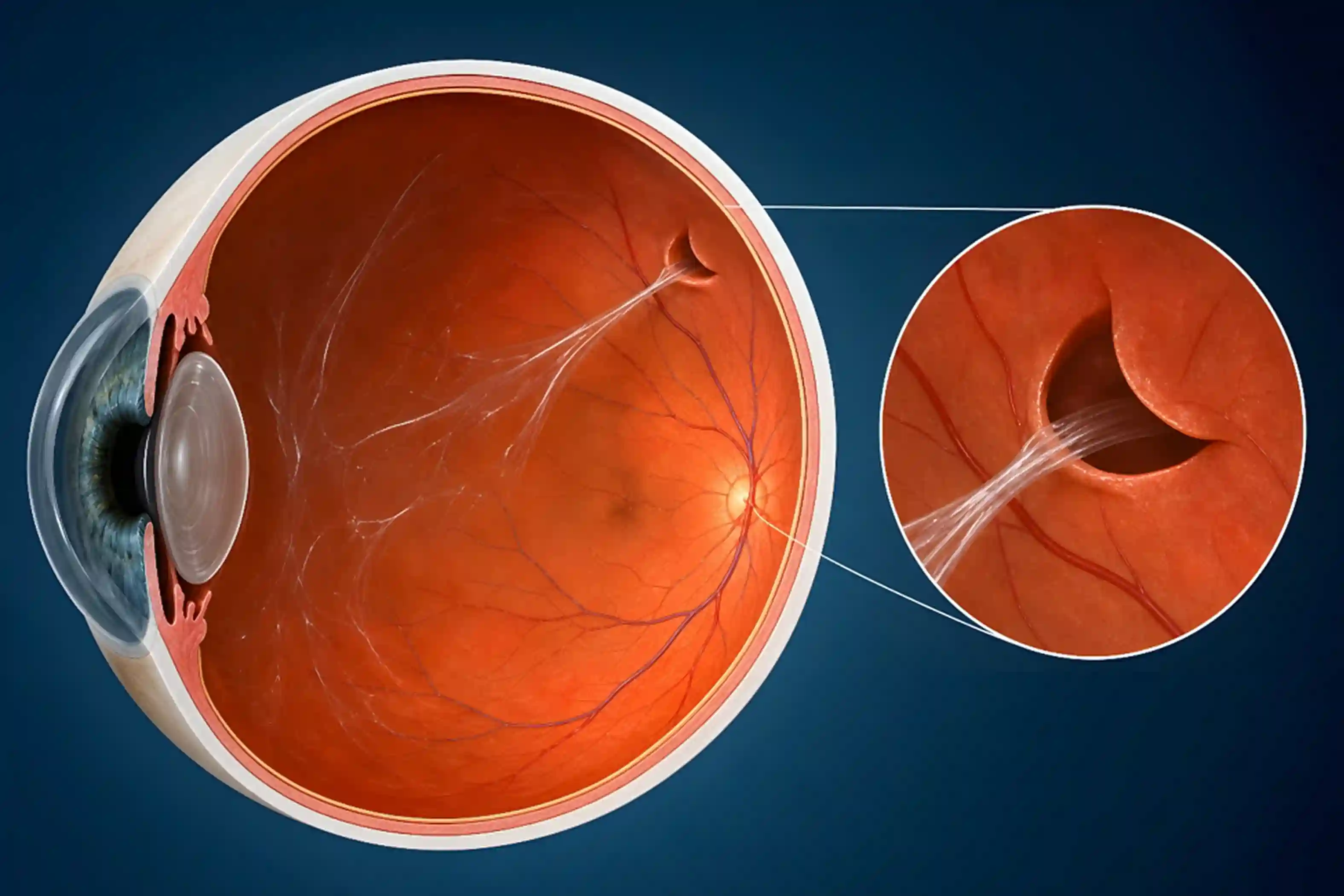
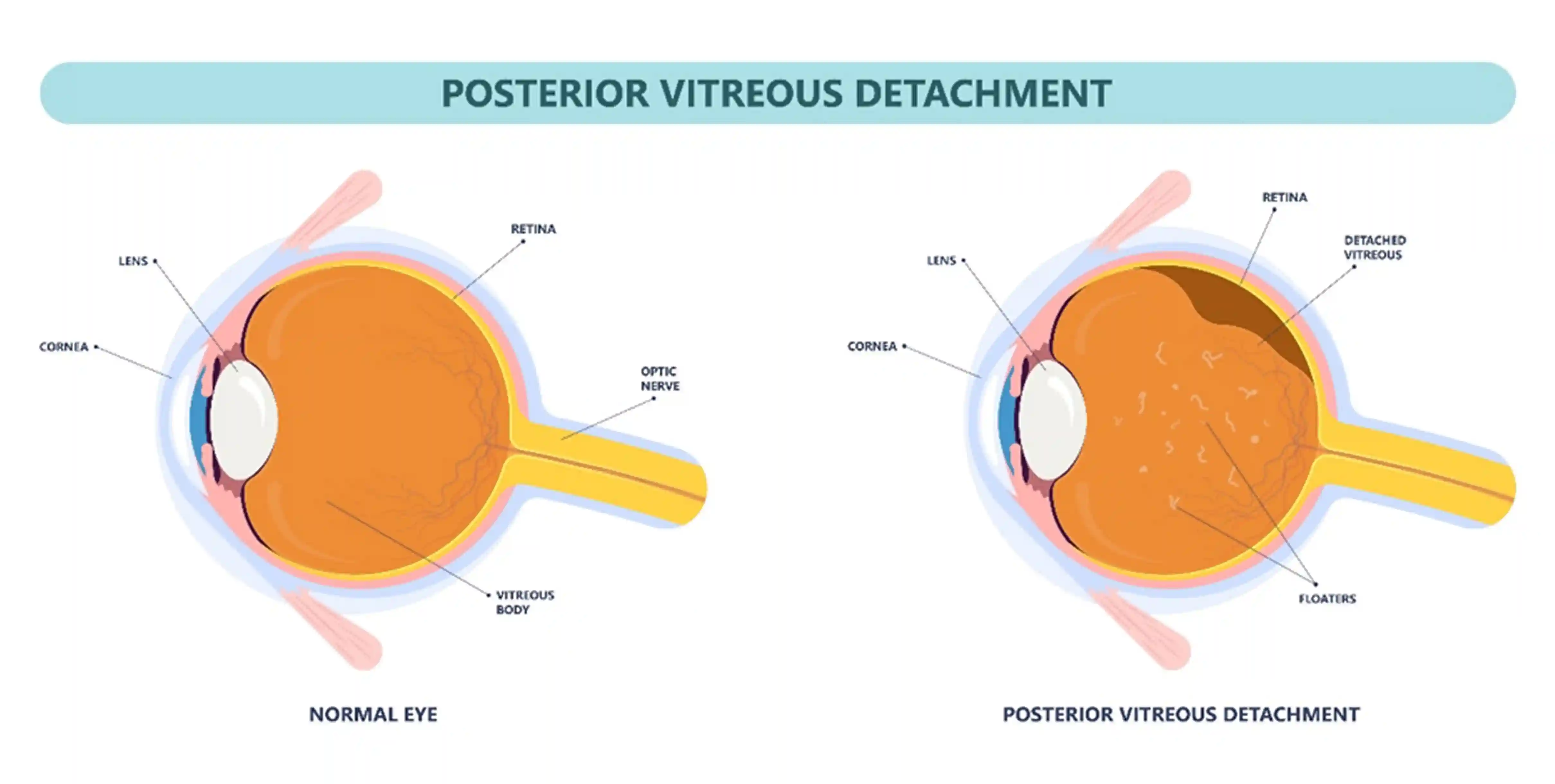
Posterior vitreous detachment (PVD) occurs when the vitreous the clear, gel-like substance that fills the eye shrinks and separates from the retina.
The vitreous is firmly attached to the retina during youth. As we age, it gradually becomes more liquid, causing it to pull away from the retina. This process is known as posterior vitreous detachment.
Most cases of PVD in the eye do not permanently affect vision. However, because the vitreous is attached to the retina, the separation can occasionally create a retinal tear. For this reason, anyone experiencing new posterior vitreous detachment symptoms should undergo a comprehensive retinal examination.
What Causes PVD?
One of the most common questions patients ask is what causes PVD.
In most people, PVD develops naturally with age. As the vitreous loses its gel-like consistency, it shrinks and eventually separates from the retina.
Other factors that may increase the risk include:
- Age over 50
- Nearsightedness (myopia)
- Previous cataract surgery
- Eye trauma
- Diabetes
- Inflammation inside the eye
- Previous PVD in the other eye
Although these factors increase the likelihood of developing PVD, many people experience the condition simply as part of the normal aging process.

Common Posterior Vitreous Detachment Symptoms
Recognizing posterior vitreous detachment symptoms is important because some symptoms overlap with retinal emergencies.
Sudden Floaters
One of the earliest and most common PVD symptoms is the appearance of floaters.
Patients often describe them as:
- Black dots
- Cobwebs
- Threads
- Squiggly lines
- Small moving shadows
A sudden floater in one eye is particularly common during the early stages of PVD. While a few floaters are usually harmless, a sudden increase in floaters should always be evaluated.
Flashes of Light
As the vitreous pulls away from the retina, it may stimulate retinal cells, causing brief flashes of light in your side vision.
These flashes are typically more noticeable in dim lighting and often decrease as the vitreous completely separates.
Weiss Ring
A classic finding in PVD is the appearance of a Weiss ring.
A Weiss ring floater appears as a circular or ring-shaped shadow drifting across your vision. It forms when the vitreous detaches from the optic nerve and is considered a characteristic sign of posterior vitreous detachment.
Although a Weiss ring itself is usually harmless, it should still be evaluated because retinal tears can occur during the same process.
Mild Blurred Vision
Some patients notice temporary blurry vision while the vitreous is separating. This usually improves as the eye adapts, although persistent, blurred vision should be examined.
When Are PVD Symptoms Serious?
Most posterior vitreous detachment symptoms are part of the normal aging process, but some indicate that the retina may have been damaged.
Contact our retina specialist immediately if you notice:
- A sudden shower of floaters
- Frequent flashes of light
- A dark curtain across your vision
- Sudden loss of side vision
- Rapid worsening of blurred vision
These symptoms may indicate a retinal tear or retinal detachment, both of which require prompt treatment to help preserve vision.
How Is PVD Diagnosed?
Because posterior vitreous detachment symptoms can closely resemble those of retinal tears, a comprehensive retinal examination is essential.
Our retina specialist may perform:
Dilated Eye Examination
Dilating the pupils allows a detailed view of the retina to check for retinal tears, bleeding, or retinal detachment.
Optical Coherence Tomography (OCT)
OCT provides high-resolution images of the retina and helps evaluate the vitreoretinal interface when needed.
Ocular Ultrasound
If dense floaters or bleeding make the retina difficult to see, an ultrasound can help identify retinal tears or detachment.
Early diagnosis helps determine whether symptoms are due to uncomplicated PVD or a retinal condition requiring treatment.
PVD Treatment
Many patients are relieved to learn that PVD treatment is not always necessary. In most cases, posterior vitreous detachment is a natural part of aging and does not require medical intervention.
The primary goal is to ensure that the vitreous has separated without causing a retinal tear or retinal detachment. Our retina specialist may recommend one or more follow-up visits to monitor your eye, particularly during the first few weeks after symptoms begin.
If your examination shows that the retina remains healthy, no additional treatment is usually required.
PVD Eye Treatment
The appropriate PVD eye treatment depends on whether complications are present.
For uncomplicated PVD, treatment typically involves careful observation and regular retinal examinations. Over time, the brain adapts to most floaters, making them less noticeable in everyday activities.
If posterior vitreous detachment causes a retinal tear, treatment may include laser therapy or cryotherapy to seal the tear and reduce the risk of retinal detachment. In more advanced cases, retinal surgery may be recommended to repair the damage and help preserve vision.
Because treatment varies depending on the underlying condition, an accurate diagnosis is the first step toward protecting your eyesight.
PVD Eye: How Long Does It Last?
One of the most common questions patients ask is, PVD eye how long does it last?
The answer varies from person to person. Flashes of light often become less frequent within several weeks as the vitreous finishes separating from the retina. Floaters may remain for several months, although many gradually become smaller or less noticeable as the brain learns to ignore them.
While symptoms often improve with time, it is important to continue monitoring your vision. New floaters, flashes, or changes in vision should be reported promptly, even if you have already been diagnosed with PVD.
Can Posterior Vitreous Detachment Be Prevented?
Because posterior vitreous detachment is usually a natural part of aging, it cannot always be prevented.
However, maintaining regular comprehensive eye examinations becomes increasingly important with age, especially if you are nearsighted, have diabetes, or have previously experienced PVD in one eye. Early retinal evaluations can help identify complications before they affect your vision.
Protecting your eyes from injury and managing underlying health conditions also supports long-term retinal health.
When Should You See Our Retina Specialist?
Although PVD in eye is often harmless, any sudden change in vision should be evaluated without delay.
Schedule an appointment if you experience:
- A sudden floater in one eye
- A rapid increase in floaters
- New flashes of light
- A shadow or curtain across your vision
- Sudden blurred vision
- Loss of peripheral vision
If you experience sudden vision changes, Dr. Paul Hahn and phRETINA team in Nanuet, NY, are here to provide prompt diagnosis and expert retinal care
Conclusion
Experiencing posterior vitreous detachment symptoms can be concerning, but in many cases, PVD is a normal part of the aging process. Symptoms such as floaters, flashes of light, or a Weiss ring floater often improve over time. However, because these symptoms can also indicate a retinal tear or retinal detachment, they should never be ignored.
Prompt evaluation allows our retina specialist to determine whether your symptoms are related to uncomplicated PVD or require immediate treatment.
Early diagnosis remains the best way to protect your vision and address retinal complications before they progress.
Frequently Asked Questions
-
Are posterior vitreous detachment symptoms permanent?
Most posterior vitreous detachment symptoms improve over time. Flashes typically resolve within weeks, while floaters often become less noticeable over several months. -
Is a Weiss ring dangerous?
A Weiss ring is a common sign of posterior vitreous detachment and is usually not harmful by itself. However, because it can occur alongside a retinal tear, it should always be evaluated by our retina specialist. -
Can PVD cause blindness?
Posterior vitreous detachment alone rarely causes vision loss. However, if it leads to a retinal tear or retinal detachment that is left untreated, permanent vision loss may occur. -
Does everyone with PVD need treatment?
No. Most patients do not require PVD treatment unless a retinal complication develops. Regular monitoring helps ensure the retina remains healthy as the vitreous completes its separation.