
Noticing small moving spots or threads in your vision can be unsettling, especially at a younger age. Many patients worry about floaters in the eye at a young age and whether they indicate a serious underlying condition.
While floaters are more commonly associated with aging, they can also occur earlier in life. Understanding floaters in the eye at a young age helps distinguish between harmless changes and situations that require medical attention.
What Are Eye Floaters?
Patients often ask: what is an eye floater?
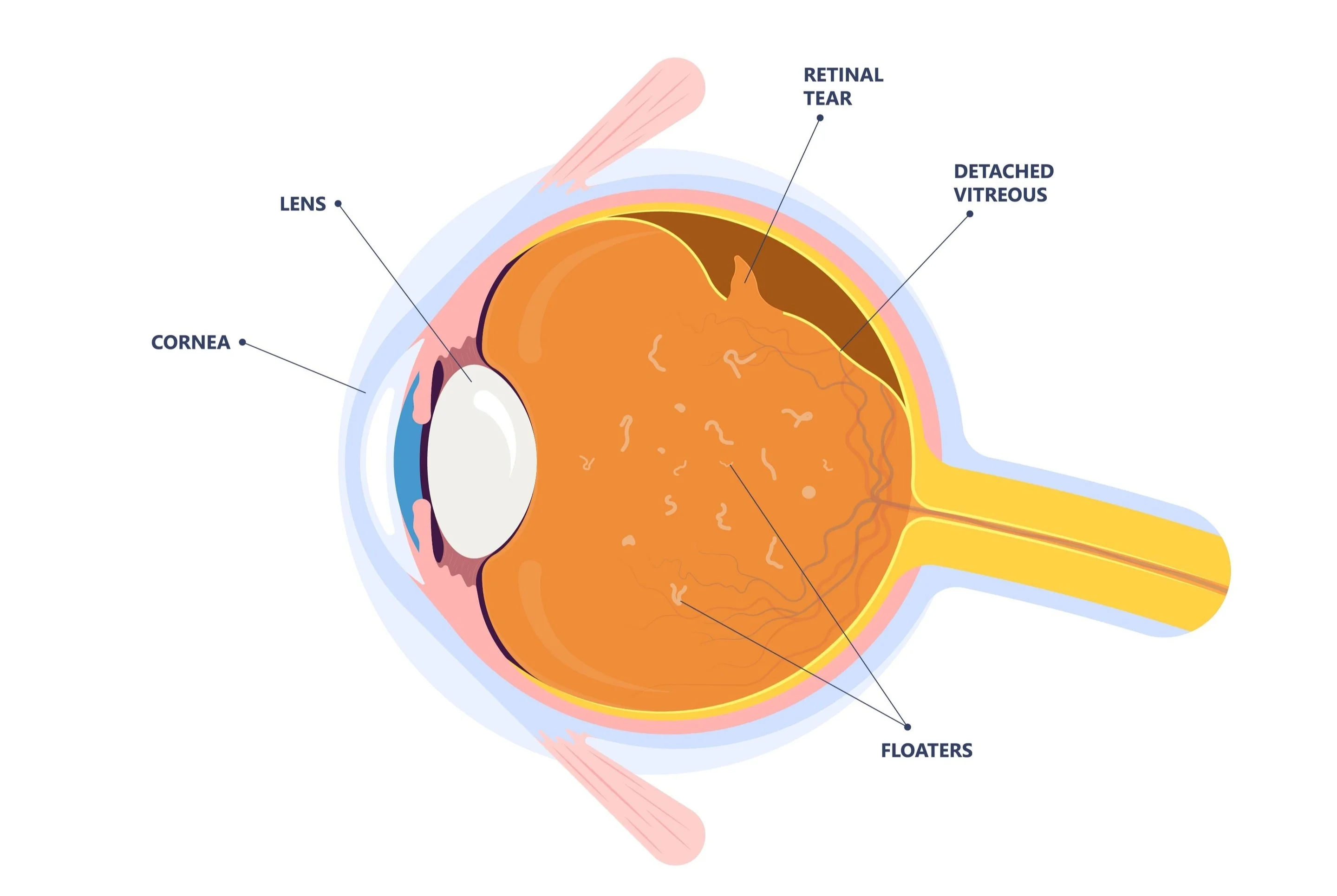
Floaters are small shadows cast on the retina by tiny clumps within the vitreous, the gel-like substance inside the eye. These appear as floaters in vision, often described as black spots in vision, threads, or cobweb-like shapes.
Although they may seem to move across your field of view, floaters are inside the eye. In medical terms, this condition is referred to as myodesopsia.
Why Do Floaters Occur at a Young Age?
Floaters are not always linked to aging. Several factors can explain floaters in the eye at a young age, including:
- Natural variations in the vitreous gel
- Nearsightedness (myopia)
- Eye strain or prolonged screen use
- Minor inflammation inside the eye
In many cases, floaters in the eye at a young age are harmless and do not affect long-term vision. However, understanding the cause is important for proper evaluation.
When Are Floaters a Cause for Concern?
While most cases are being ignored, certain symptoms should not be ignored.
You should seek medical attention if you notice:
- Sudden floaters in one eye
- A rapid increase in floaters in vision
- Flashes of light
- A shadow or curtain-like effect in your vision
These signs may indicate underlying retinal issues. In such situations, floaters in the eye at a young age may be linked to more serious conditions that require prompt care.

Connection to Retinal Conditions
In some cases, floaters can be associated with retina conditions.
These may include:
- Retinal tears or early retinal detachment
- Changes in the vitreous pulling on the retina
- Other retinal conditions that affect vision stability
Understanding floaters in the eye at a young age is important because early detection of retinal issues can prevent complications.
Do Floaters Affect Vision Permanently?
For most individuals, floaters do not cause permanent vision loss. They may become less noticeable over time as the brain adapts to their presence.
However, persistent or worsening specks in eye at an early age should be evaluated to rule out underlying causes. Monitoring changes is key to maintaining long-term eye health.
How Are Floaters Evaluated?
A comprehensive retinal examination is essential to determine the cause of floaters.
This typically includes:
- Dilated eye examination
- Retinal imaging
- Assessment of vitreous and retinal health
Such evaluations help identify whether floaters in the eye at a young age are harmless or require further treatment.
Managing Floaters in Daily Life
In most cases, no specific treatment is needed. Patients are often advised to:
- Avoid excessive eye strain
- Maintain regular eye check-ups
- Monitor any changes in symptoms
Simple lifestyle adjustments can help reduce awareness of floaters in the eye at a young age and improve visual comfort.
How to Protect Your Retinal Health
Maintaining overall eye health is essential, especially when experiencing floaters.
Key steps include:
- Scheduling regular eye exams
- Protecting eyes from strain and injury
- Managing underlying conditions like myopia
These measures support retinal stability and help detect changes early.
Why Regular Retinal Exams Matter
Floaters may appear harmless, but they can sometimes signal early retinal changes. A detailed retinal examination allows specialists to detect subtle abnormalities before they affect vision.
Routine check-ups are especially important if floaters in the eye at a young age appear suddenly or increase over time. Early detection supports timely care and helps prevent complications.
Conclusion
Floaters in the eye at a young age are often harmless and commonly related to natural changes in the vitreous. However, sudden or increasing floaters should never be ignored.
Understanding floaters in the eye at a young age allows patients to recognize when symptoms are normal and when they require medical attention. Early evaluation and regular monitoring play a key role in protecting long-term vision.
FAQs
- What causes floaters in the eye at a young age?
They are often caused by natural changes in vitreous, myopia, or minor eye conditions. - Are floaters dangerous?
Most cases are harmless, but floaters in eye at a young age can sometimes indicate retinal issues if they appear suddenly or increase rapidly. - Do floaters in the eye go away?
Floaters may not completely disappear, but they often become less noticeable over time as the brain adapts. - When should I worry about floating in my eyes?
You should seek medical care if floaters are accompanied by flashes, sudden vision changes, or appear abruptly in large numbers.