
Seeing brief flashes, flickers, or streaks of light can be alarming, especially when they appear unexpectedly. While some episodes may be harmless, flashes of light in vision can also be an important warning sign of a retinal condition that requires prompt medical attention.
Because the retina plays a critical role in processing visual information, any unusual visual symptom deserves careful evaluation.

Understanding the causes of flashes of light in vision can help patients recognize when symptoms may indicate a more serious problem.
What Are Flashes of Light?
Flashes are brief bursts of light that appear without an external light source.
Patients often describe flashes of light in vision as:
- Lightning streaks
- Camera flashes
- Flickering lights
- Spark-like sensations
- Streaks of light in vision
These symptoms may occur in one eye or both eyes and can vary in frequency and intensity.
Why Do Flashes Occur?
The most common cause of flashes of light in vision is traction on the retina.
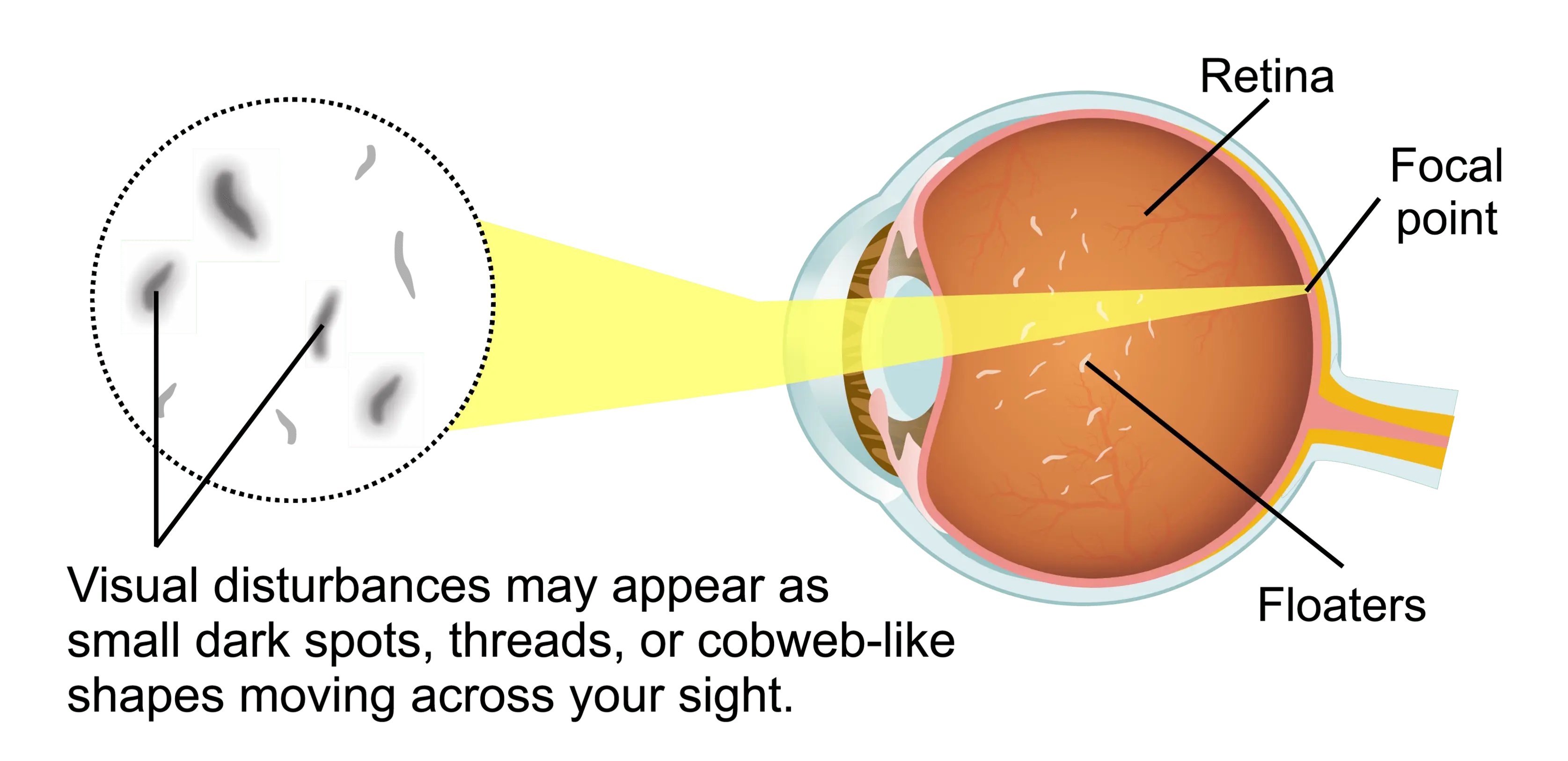
Inside the eye, the vitreous is a gel-like substance that fills the space between the lens and retina. As people age, the vitreous naturally changes and may begin to pull away from the retina.
When this pulling occurs, the retina can become stimulated, creating the perception of light even when no actual light is present.
Although this process can be a normal part of aging, flashes of light in vision should never be ignored because they may sometimes indicate retinal injury or disease.
Common Causes of Flashes of Light
Posterior Vitreous Detachment
A posterior vitreous detachment occurs when the vitreous separates from the retina. This is one of the most common causes of flashes and often occurs with aging.
Many patients experience occasional flashes along with new floaters during this process.
Retinal Tears
A retinal tear can develop when the vitreous pulls too strongly on the retina.
In these cases, flashes of light in vision may become more frequent or noticeable. Without treatment, a retinal tear can progress to retinal detachment.
Retinal Detachment
Retinal detachment is a serious condition that requires urgent treatment.
Patients may experience:
- Flashes
- Floaters
- Peripheral vision loss
- A curtain-like shadow across vision
Because retinal detachment threatens permanent vision loss, prompt evaluation is critical.
Ocular Migraines
In some individuals, flashes may occur due to ocular migraines.
These episodes often create shimmering lights, zigzag patterns, or temporary vision disturbance. Symptoms typically resolve on their own but should still be discussed with an eye care professional if they are new or unusual.
Symptoms That Should Not Be Ignored
Not all flashes indicate a medical emergency, but certain symptoms require immediate attention.
Warning signs include:
- A sudden increase in flashes of light in vision
- New floaters appearing at the same time
- Sudden vision changes
- Peripheral vision loss
- A dark shadow or curtain across vision
When flashes occur alongside these symptoms, a retinal evaluation should be performed as soon as possible.
Understanding Vision Disturbances
A vision disturbance can take many forms, including flashing lights, blurred vision, distortion, or missing areas of sight.
While some visual changes may be temporary, persistent symptoms should always be investigated. The retina is delicate tissue, and early intervention often leads to better outcomes.
Patients who experience recurring flashes of light in vision should schedule a comprehensive retinal examination to determine the underlying cause.
Who Is at Higher Risk?
Certain individuals may be more likely to experience retinal problems associated with flashes.
Risk factors include:
- Age-related vitreous changes
- Significant nearsightedness
- Previous eye surgery
- Eye trauma
- Family history of retinal disease
- Diabetes
These individuals should be particularly attentive to flashes of light in vision and other new visual symptoms.
How Are Flashes Evaluated?
A detailed retinal examination is the most effective way to determine the cause of flashes.
During the evaluation, a retina specialist may perform:
- Dilated retinal examination
- Retinal imaging
- Assessment of the vitreous and retina
These tests help identify retinal tears, retinal detachment, and other conditions that may be causing flashes of light in vision.
Why Early Evaluation Matters
Some causes of flashes are harmless, while others can threaten vision if left untreated.
Early diagnosis allows treatment to begin before permanent retinal damage occurs. This is especially important when flashes result from retinal tears or developing retinal detachment.
Recognizing flashes of light in vision and seeking prompt care can significantly improve long-term outcomes.
How to Protect Your Retinal Health
Although not all retinal conditions can be prevented, several steps can support long-term eye health:
- Schedule regular eye examinations
- Monitor changes in vision carefully
- Seek prompt evaluation for new symptoms
- Manage diabetes and blood pressure
- Protect your eyes from injury
Awareness remains one of the best ways to protect vision and retinal health.
Why Regular Retinal Exams Matter
Many retinal conditions develop before noticeable symptoms appear.
Routine retinal examinations can help detect abnormalities early, including retinal tears, vitreous changes, and other conditions associated with flashes of light in vision.
Patients at higher risk should work closely with their eye care provider to establish an appropriate monitoring schedule.
The Bottom Line
Flashes of light in vision are common but should never be dismissed without understanding their cause. While some cases are related to normal vitreous changes, others may signal retinal tears or retinal detachment that require urgent treatment.
Recognizing flashes of light in vision, especially when accompanied by floaters or sudden vision changes, can help patients seek care quickly and protect their sight.
Expert Retina Care Matters
At phretina, we provide personalized evaluation and treatment for many retinal conditions, with an emphasis on protecting vision for years to come.
If you are experiencing flashes of light in vision or other concerning visual symptoms, a comprehensive retinal evaluation can help determine the cause and protect your long-term vision.
Frequently Asked Questions
-
What causes flashes of light in vision?
Flashes of light in vision commonly occur when the vitreous gel pulls on the retina. They may also be associated with retinal tears, retinal detachment, or ocular migraines. -
Are flashes of light in vision a medical emergency?
Not always. However, if accompanied by floaters, sudden vision changes, or peripheral vision loss, it should be evaluated immediately. -
Can a retina specialist diagnose the cause of flashes?
Yes. A retina specialist can perform a detailed retinal examination to determine whether flashes are related to normal vitreous changes or a more serious retinal condition. -
When should I worry about flashes of light in my
vision?
You should seek prompt medical attention if flashes occur suddenly, become more frequent, or appear alongside floaters, shadows, or vision loss.