
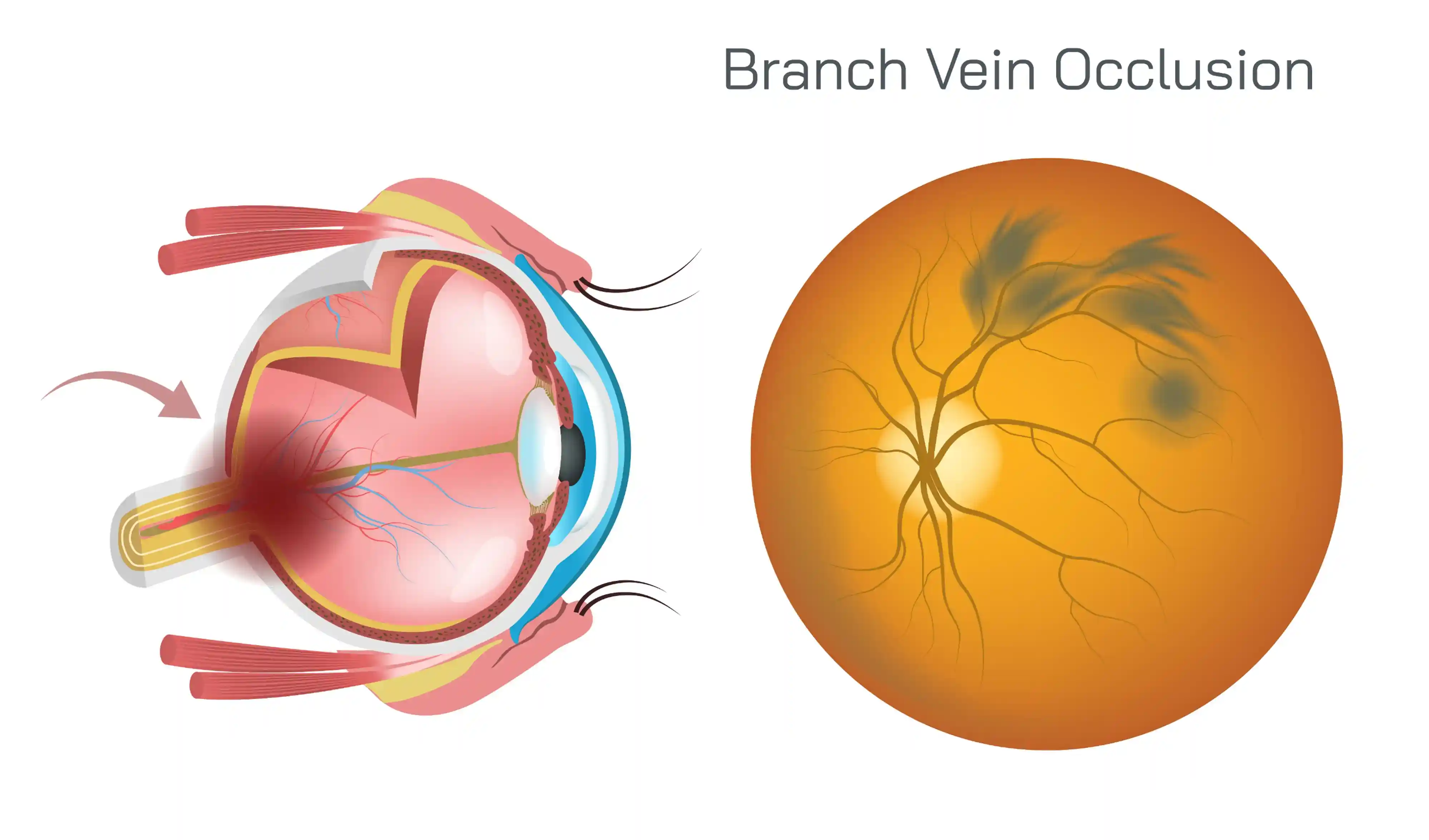
Branch retinal vein occlusion (BRVO) occurs when one of the smaller veins that drains blood from the retina becomes blocked.
This can interfere with normal blood flow, increase pressure within nearby blood vessels, and cause blood or fluid to leak into the retinal tissue.
When fluid collects in the macula, the central part of the retina responsible for detailed vision, the condition is known as BRVO with macular edema.
The resulting swelling can make it difficult to read, recognize faces, or see fine details clearly.
BRVO is a type of retinal vein occlusion and is different from a retinal artery blockage. Its effect on vision depends on the location of the blocked vein, the amount of swelling, and whether the surrounding retinal tissue has been damaged.
What Causes Branch Retinal Vein Occlusion?
Branch retinal vein occlusion develops when blood cannot drain normally through a retinal vein. In many cases, the blockage occurs where a retinal artery and vein cross.
Because these vessels share a close relationship, changes in the artery can place pressure on the vein and interfere with blood flow.
Several health factors can increase the risk of BRVO, including:
- High blood pressure: Long-standing hypertension can change the structure of retinal blood vessels and increase pressure on nearby veins.
- High cholesterol: Elevated cholesterol can contribute to changes in blood vessels and circulation.
- Diabetes: Diabetes can damage blood vessels and increase the risk of retinal vascular problems.
- Increasing age: BRVO becomes more common with age, particularly in people with other vascular risk factors.
- Glaucoma: Elevated eye pressure and associated vascular factors may increase the risk of retinal vein occlusion.
- Cardiovascular conditions: Certain conditions affecting circulation may contribute to the risk.
Not everyone with these risk factors develops BRVO, and the exact cause is not always clear. Identifying and managing relevant health conditions is an important part of care after diagnosis.
What Are the Symptoms of Branch Retinal Vein Occlusion?
The symptoms of branch retinal vein occlusion vary depending on which part of the retina is affected and whether macular edema develops.
Common symptoms include:
- Blurred or distorted central vision
- Difficulty reading or seeing fine details
- Dark spots or areas of reduced vision
- A sudden or gradual change in vision in one eye
- Reduced visual sharpness
Some people notice symptoms soon after the blockage occurs, while others may have less obvious changes initially. BRVO can also be detected during a routine dilated eye examination.
When macular edema develops, swelling affects the area responsible for central vision.
Daily tasks that need detailed eyesight may be harder due to blurred objects and warped straight lines.
Do not assume that new blurring or vision loss will resolve without treatment.
How Is BRVO With Macular Edema Diagnosed?
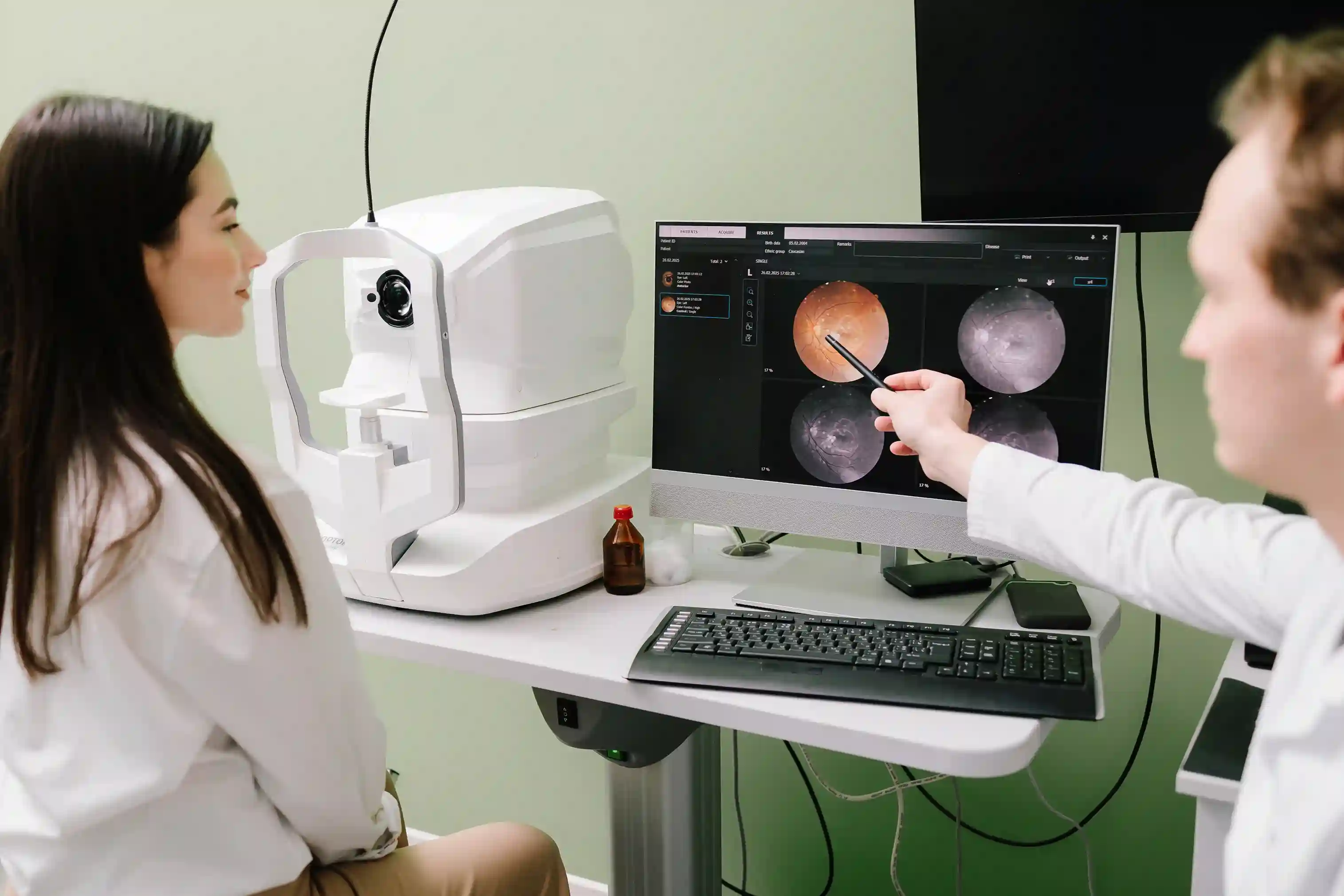
A retina specialist uses an eye examination and retinal imaging to confirm the diagnosis and assess the extent of damage.
Dilated Retinal Examination
Eye drops widen the pupils, allowing the specialist to examine the retina and look for bleeding, blocked vessels, swelling, and other changes associated with BRVO.
Optical Coherence Tomography (OCT)
OCT produces detailed cross-sectional images of the retina. It helps identify fluid within the macula, measure swelling, and monitor how the retina responds to treatment.
Fluorescein Angiography
In selected cases, fluorescein angiography may be used to examine retinal blood flow. This test can help identify areas of leakage or reduced circulation and guide treatment decisions.
These tests let the specialist decide and how to treat them.

What Is the Treatment for BRVO With Macular Edema?
The goal of BRVO treatment is to reduce macular swelling when needed, preserve remaining vision, and manage complications.
1. Anti-VEGF Injections
Anti-VEGF medications are commonly used to treat macular edema caused by branch retinal vein occlusion. These medicines block vascular endothelial growth factor (VEGF), a protein involved in blood vessel leakage.
By reducing leakage and swelling, injections may improve or stabilize vision in many patients. Treatment often involves a series of injections, with the timing determined by the patient's response and OCT findings.
Learn more about anti-VEGF injections for retinal disease.
2. Corticosteroid Treatment
In selected cases, corticosteroid medication may be considered to reduce inflammation and retinal swelling. The potential benefits and risks, including increased eye pressure and cataract development, must be considered when choosing this approach.
Your retina specialist can explain whether corticosteroid treatment is appropriate for your condition.
3. Laser Treatment
Laser therapy may be considered in certain cases of BRVO, particularly when specific retinal complications develop. It is not the first choice for every patient with macular edema, and its role depends on the location of the affected retina and other examination findings.
Learn more about laser photocoagulation for retinal disease.
4. Observation and Monitoring
Not every patient needs immediate treatment. In some cases, the swelling may improve, or the specialist may recommend monitoring before deciding on an intervention.
Regular examinations and OCT imaging help determine whether the edema is resolving, remaining stable, or worsening. If vision changes or swelling progresses, treatment recommendations may change.
5. Managing Underlying Health Conditions
Controlling high blood pressure, diabetes, and cholesterol is an important part of managing retinal vascular disease. Your primary care physician or other treating clinician can help address these risk factors alongside retinal care.
How Serious Is Branch Retinal Vein Occlusion?
The seriousness of branch retinal vein occlusion depends on the amount of retina affected, whether the macula is involved, and whether complications develop.
When BRVO causes macular edema, central vision may become blurred or distorted. Some patients experience meaningful improvement with treatment, while others may have persistent visual changes.
In more severe cases, reduced blood flow can lead to retinal ischemia, which may increase the risk of abnormal blood vessel growth and bleeding. Regular follow-up is important because some complications may develop over time.
BRVO does not always lead to permanent severe vision loss. However, the condition should not be ignored, particularly when macular swelling is affecting vision.
Why Choose Dr. Paul Hahn at phRETINA?
Dr. Paul Hahn, MD, PhD, FASRS, is a board-certified, fellowship-trained retina specialist with extensive experience in retinal and macular care.
He has led more than 30 clinical trials and has over 100 publications in retinal disease treatment.
At phRETINA in Nanuet, NY, Dr. Hahn combines retinal imaging with evidence-based treatment and personalized care.
The practice serves patients throughout Rockland County, Bergen County, NJ, and nearby communities in Westchester County, NY.
Conclusion
Do not compromise or delay the symptoms of BRVO. If you or your loved ones are suffering from it, get the proper care for your vision as BRVO with macular edema can affect central vision.
But appropriate diagnosis, treatment, and follow-up can help manage swelling and reduce the risk of further complications.
The right treatment plan depends on the extent of retinal involvement and how the eye responds over time.
Not all cases of BRVO cause serious visual loss. However, macular edema that impairs vision should not be overlooked.
Frequently Asked Questions
-
Can BRVO with macular edema improve?
Yes. Macular edema may respond to treatment, particularly anti-VEGF injections. Some patients experience improved vision, while others primarily achieve stabilization. -
What is the most common treatment for BRVO with macular edema?
Anti-VEGF injections are a commonly used treatment for macular edema caused by BRVO. Corticosteroid treatment, laser therapy, or observation may be appropriate in selected cases, depending on the clinical findings. -
Does BRVO always cause vision loss?
No. Some people have mild symptoms or limited changes in vision. However, when the macula is affected by swelling, central vision can become blurred or distorted. -
How long does it take to recover from BRVO with macular edema?
Recovery varies. Some patients respond to treatment over weeks or months, while others need repeated injections and longer-term monitoring. There is no single recovery timeline for every patient.