
Seeing flashes of light in vision or the corner of your eye can be unsettling. You may notice a quick spark, streak, or flicker that disappears almost as quickly as it appeared.
Sometimes, these flashes happen because of normal changes inside the eye. But new flashes can also be a warning sign of a retinal tear or detachment. Knowing the difference is important.

What Do Flashes of Light in Vision Look Like?
Flashes of light in vision can appear in different ways. Some people describe them as:
- A quick flash or spark
- Lightning-like streaks
- Flickering lights
- Bright spots
- Arcs of light
- Flashes at the side or corner of the eye
They may be more noticeable in a dark room or when moving the eyes. Flashes can also occur in just one eye.
The way the flashes look does not necessarily tell you what is causing them. A retinal examination is often needed to determine the cause.
What Causes Flashes of Light in Vision?
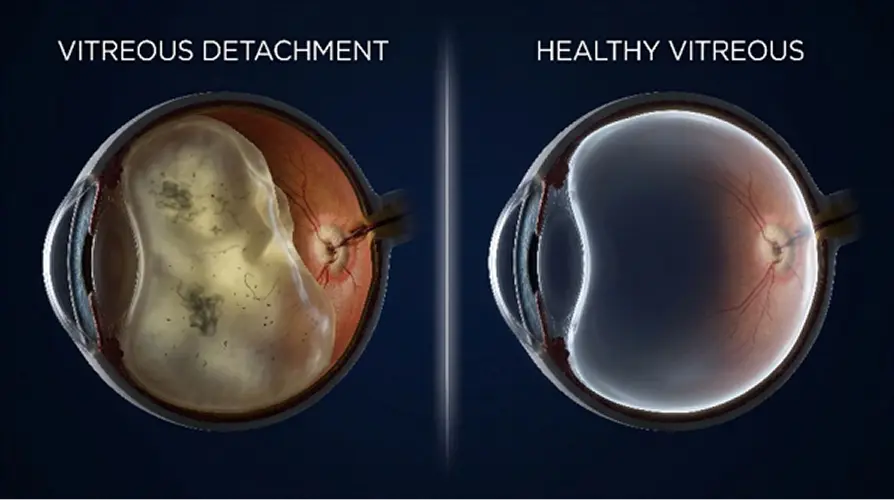
There are several possible causes of flashes of light in the eye. Some are related to changes in the vitreous, the gel-like substance inside the eye. Others involve the retina or may be unrelated to the eye itself.
Posterior Vitreous Detachment
As we get older, the vitreous naturally becomes more liquid and can pull away from the retina. This is called a posterior vitreous detachment, or PVD.
When the vitreous pulls on the retina, it can create the sensation of flashes. PVD is common and does not always cause a serious problem. However, the same pulling force can sometimes create a retinal tear.
That is why new flashes should not automatically be assumed to be harmless.
Retinal Tear
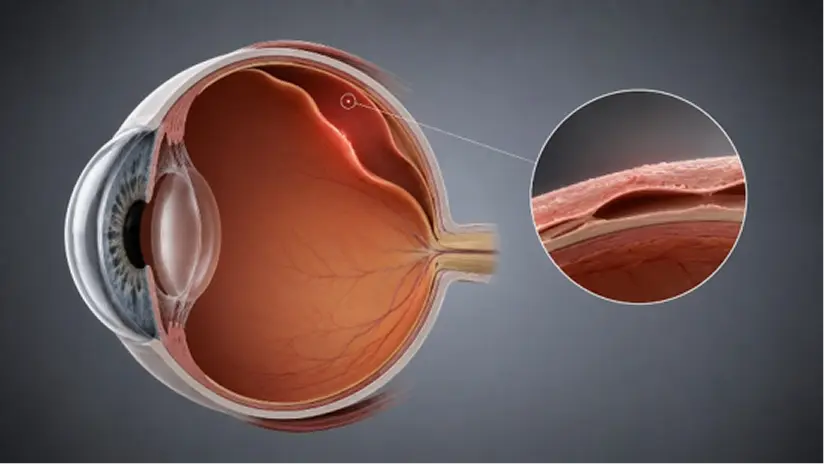
A retinal tear can develop when the vitreous pulls strongly enough on the retina. One possible warning sign is a sudden appearance of flashes of light in one eye, particularly when new floaters appear at the same time.
A retinal tear may not cause major vision changes at first. Finding and treating it early can help prevent it from progressing to a retinal detachment.
Retinal Detachment
A retinal detachment occurs when the retina pulls away from the back of the eye. This requires urgent medical attention.
Along with flashes of light in peripheral vision, you may notice:
- A sudden increase in floaters
- A dark shadow in your vision
- A curtain-like area blocking part of your sight
- Sudden blurred or reduced vision
If these symptoms appear suddenly, do not wait to see whether they disappear.
Migraine With Visual Aura
Not all eyesight flashes of light come from a retinal problem. Migraine with visual aura can cause flashing or shimmering lights, zigzag patterns, and other temporary changes in vision.
These symptoms often affect both eyes and may develop gradually. However, a new visual disturbance should not automatically be attributed to migraine, especially if it affects only one eye.
Eye Injury and Other Conditions
An injury to the eye can sometimes cause flashes. Other eye conditions involving inflammation, bleeding, or changes within the eye may also produce similar symptoms.
Because there are several possible causes, an examination is the best way to determine what is happening.
When Should You Worry About Flashing in Eyesight?
A few brief flashes may not mean there is a serious problem. The concern is greater when the flashes are new, sudden, or occurring in one eye.
Seek prompt retinal evaluation if you notice:
- New flashes that appear suddenly
- A sudden increase in floaters
- Flashes with a dark shadow or curtain
- Loss of peripheral vision
- Sudden blurred or reduced vision
- Flashes following an eye injury
These symptoms can occur with a retinal tear or detachment. A retinal detachment needs urgent treatment because it can permanently affect vision.

How Are Flashes of Light Diagnosed?
When you report new flashes, our retina specialist will ask about when they started, whether they occur in one or both eyes, and whether you have noticed floaters or other changes in your vision.
A dilated retinal examination allows the retina to be examined closely for tears, detachment, vitreous changes, bleeding, and other problems. Depending on what is found, additional retinal imaging or an ultrasound may also be needed.
The goal is straightforward: determine whether the flashes are coming from a change in the vitreous, a retinal problem, or another cause.
How Are Flashes of Light Treated?
Treatment depends entirely on the cause.
If flashes are related to an uncomplicated posterior vitreous detachment and there is no retinal tear, treatment may not be necessary. The flashes often become less noticeable with time.
If a retinal tear is found, laser retinopexy or cryotherapy may be used to seal the affected area and reduce the risk of retinal detachment.
If a retinal detachment has already developed, treatment may involve pneumatic retinopexy, scleral buckle surgery, or vitrectomy, depending on the location and severity of the detachment.
When flashes are related to migraine or another condition outside the retina, treatment focuses on that underlying cause.
Why You Shouldn't Ignore New Flashes
The occasional flash does not necessarily mean something is wrong. The problem is that symptoms alone cannot tell you whether a retinal tear is present.
If you are seeing flashes of light in the corner of your eye for the first time, especially if they are accompanied by new floaters or changes in vision, a retinal examination is important.
Finding a retinal tear early can allow it to be treated before it progresses to a retinal detachment.
Why Choose phRETINA and Dr. Paul Hahn?
Dr. Paul Hahn, MD, PhD, FASRS, is a board-certified, fellowship-trained retina specialist with extensive experience in retinal and macular care.
He has led more than 30 clinical trials and has over 100 publications in retinal disease treatment.
At phRETINA in Nanuet, NY, Dr. Hahn combines retinal imaging with evidence-based treatment and personalized care. The practice serves patients throughout Rockland County, Bergen County, NJ, and nearby communities in Westchester County, NY.
Conclusion
Flashes of light in vision can happen for several reasons. Sometimes they are related to normal vitreous changes, but sudden flashes can also be an early sign of a retinal tear or detachment.
If new flashes appear, particularly in one eye or alongside floaters, shadows, or vision changes, prompt evaluation can help determine the cause and protect your vision.
Frequently Asked Questions
-
Are flashes of light in the eye always serious?
No. Flashes can occur with vitreous changes or migraine. However, new or sudden flashes should be evaluated because they can also occur with a retinal tear or detachment. -
Why am I seeing flashes of light in the corner of my eye?
Flashes in the corner or side of your vision can occur when the vitreous pulls on the retina. This can happen during a posterior vitreous detachment, but it can sometimes lead to a retinal tear. -
Can flashes of light mean I have a retinal tear?
Yes. A sudden increase in flashes, especially in one eye and alongside new floaters, can be a sign of a retinal tear. -
What should I do if I suddenly see flashes in one eye?
Arrange a prompt retinal evaluation. Seek urgent care if the flashes occur with a sudden increase in floaters, a curtain or shadow in your vision, or sudden vision loss. -
Can migraines cause flashing lights?
Yes. Migraine with visual aura can cause temporary flashing, shimmering, or zigzag patterns. However, new symptoms should be evaluated rather than automatically assumed to be migraine.