
You may have lattice degeneration without knowing it. In fact, many people discover it during a routine dilated eye exam rather than because of a change in their vision.
The condition causes areas of retinal thinning, usually along the outer edges of the retina. Most people with lattice degeneration do not develop serious problems, but in some cases, the weakened retina can be associated with a retinal tear or detachment.
Understanding what lattice degeneration means and knowing the warning signs can help you protect your vision.

What Is Lattice Degeneration?
Lattice degeneration is a change in the peripheral retina where certain areas become thinner and weaker than the surrounding tissue.
The retina is the light-sensitive layer at the back of the eye. It receives light and sends signals to the brain that allow you to see. With lattice degeneration, the affected areas can have a characteristic lattice-like appearance when examined by an eye specialist.
One important thing to know is that lattice degeneration usually does not cause noticeable symptoms. You can have lattice in the eye and still have normal vision.
It can occur in one or both eyes and is often found during a dilated retinal examination.
What Causes Lattice Degeneration?
The exact lattice degeneration causes are not fully understood. It is generally considered a structural change in the peripheral retina rather than something caused by a specific injury or lifestyle choice.
Lattice degeneration may be more common in people who:
- Are nearsighted, especially with higher levels of myopia
- Have a family history of retinal problems
- Have certain inherited eye conditions
- Have had previous retinal problems
It can remain unchanged for years without affecting vision.

What Are the Symptoms of Lattice Degeneration?
Most people have no lattice degeneration symptoms at all. Because the condition usually affects the peripheral retina, it does not necessarily interfere with central vision.
Most people have no lattice degeneration symptoms at all. Because the condition usually affects the peripheral retina, it does not necessarily interfere with central vision.
The symptoms that need attention are generally signs of a possible retinal tear or detachment rather than lattice degeneration itself. These include:
- New flashes of light
- A sudden increase in floaters
- A dark shadow in your vision
- A curtain-like area across your vision
- Sudden changes or loss of vision
If any of these symptoms appear suddenly, a prompt retinal examination is important.
Is Lattice Degeneration Serious?
So, is lattice degeneration serious? In most cases, the condition itself does not cause vision loss and does not mean that retinal detachment will occur.
However, areas of retinal thinning can be associated with a higher risk of retinal tears or detachment in some patients. The risk can vary depending on factors such as the appearance and location of the lattice, the presence of retinal holes or tears, the degree of nearsightedness, and personal or family history.
For this reason, a retina specialist may recommend periodic examinations to monitor the retina.
The diagnosis itself is not necessarily a reason for concern. What matters is understanding your individual retinal findings and knowing what changes should prompt an examination.
Can Lattice Degeneration Cause Retinal Detachment?
Lattice degeneration can be associated with retinal detachment, but most people with lattice degeneration do not develop one.
The concern is that an area of retinal thinning may be more vulnerable to a tear. If a tear develops and fluid gets underneath the retina, the retina can begin to separate from the back of the eye.
Retinal detachment can cause permanent vision loss if treatment is delayed. That is why sudden flashes, new floaters, or a curtain-like shadow should never be ignored.
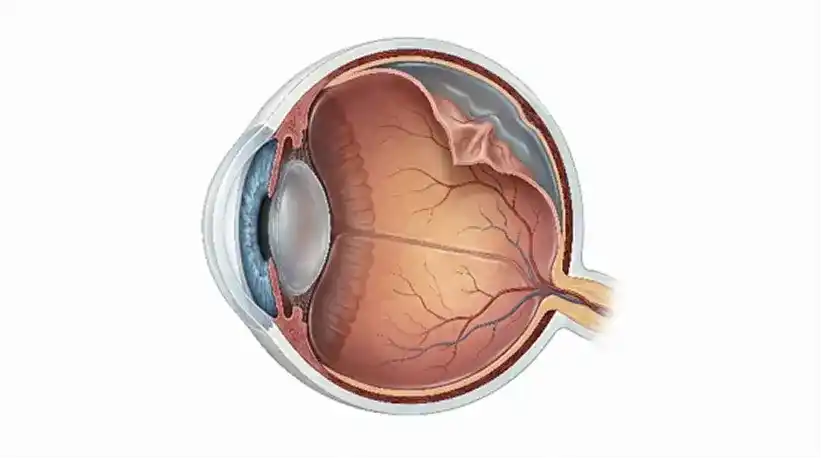
How Is Lattice Degeneration Diagnosed?
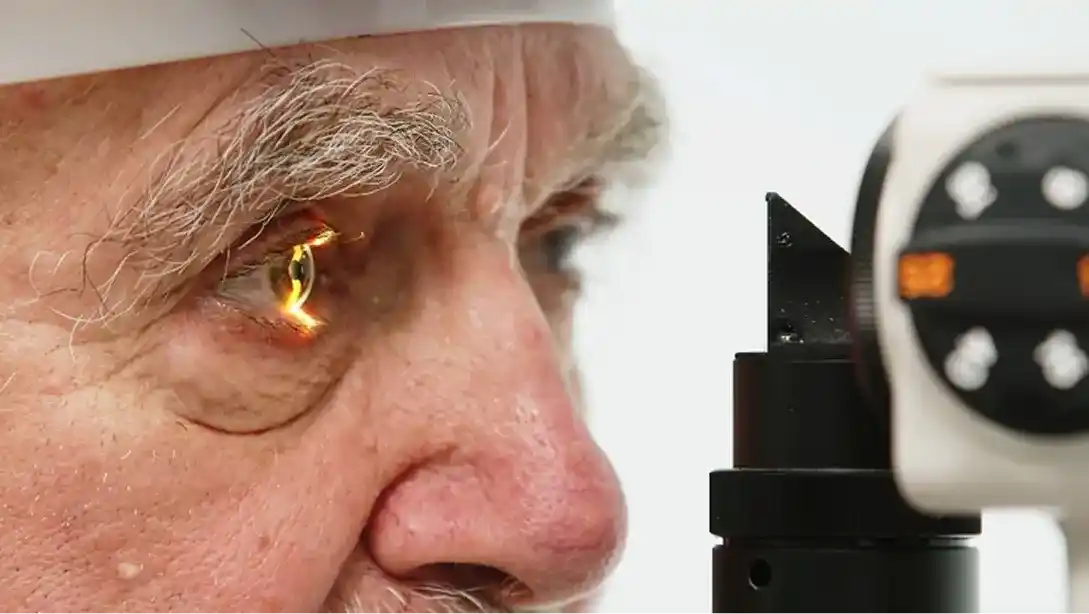
A retina specialist can usually identify lattice degeneration during a dilated eye examination.
Because the condition occurs in the peripheral retina, the examination includes a careful look at the outer areas of the retina. The specialist may check for:
- Areas of retinal thinning
- Retinal holes
- Retinal tears
- Early signs of retinal detachment
- Other peripheral retinal changes
Additional retinal imaging may be used when needed to get a closer look at specific areas.
Does Lattice Degeneration Need Treatment?
Most people with lattice degeneration do not need treatment.
If the retina is stable and there is no tear or detachment, monitoring may be all that is needed. Your follow-up schedule will depend on your retinal findings and other risk factors.
If a retinal tear or related complication develops, treatment may be recommended. Depending on the situation, a retina specialist may use laser retinopexy or cryotherapy to treat the affected area and reduce the risk of retinal detachment.
Treatment is based on what is actually seen during the retinal examination rather than the presence of lattice degeneration alone.
When Should You See a Retina Specialist?
If you already know that you have lattice degeneration, regular retinal examinations can help monitor for changes.
You should also know the warning signs that require prompt attention. Contact a retina specialist if you suddenly notice:
- Flashes of light
- Many new floaters
- A shadow or curtain across your vision
- Loss of peripheral vision
- Sudden blurred or reduced vision
These symptoms can have several causes, but they can also indicate a retinal tear or detachment. An examination is the only way to determine what is happening.
Why Choose phRETINA and Dr. Paul Hahn?
Dr. Paul Hahn, MD, PhD, FASRS, is a board-certified, fellowship-trained retina specialist with extensive experience in retinal and macular care.
He has led more than 30 clinical trials and has over 100 publications in retinal disease treatment.
At phRETINA in Nanuet, NY, Dr. Hahn combines retinal imaging with evidence-based treatment and personalized care. The practice serves patients throughout Rockland County, Bergen County, NJ, and nearby communities in Westchester County, NY.
Conclusion
Lattice degeneration is a form of retinal thinning that often causes no symptoms and does not require treatment. For some patients, however, it can be associated with a higher risk of retinal tears or detachment.
If you have been diagnosed with lattice degeneration, understanding your individual risk and keeping up with recommended retinal examinations can help monitor your eye health.
Most importantly, don't ignore sudden flashes, new floaters, shadows, or changes in vision.
FAQs
- Is lattice degeneration serious?
Usually, lattice degeneration itself does not cause significant vision problems. However, it can be associated with retinal tears or detachment in some patients, so monitoring may be recommended. - Does lattice degeneration cause vision loss?
Lattice degeneration usually does not affect central vision. Vision loss is more likely if a related complication, such as a retinal tear or detachment, develops. - What are the symptoms of lattice degeneration?
Most people have no lattice degeneration symptoms. The condition is often found during a dilated eye examination. - Can lattice degeneration be treated?
Lattice degeneration itself usually does not need treatment. If a retinal tear or another complication is found, laser treatment or cryotherapy may be recommended. - Can lattice degeneration lead to retinal detachment?
It can be associated with an increased risk of retinal detachment, but most people with lattice degeneration do not develop one.