
Dry age-related macular degeneration (dry AMD) is the most common form of macular degeneration, a progressive retinal condition that affects central vision. The macula, located in the center of the retina, is responsible for the detailed vision needed for reading, driving, and recognizing faces.
According to the Centers for Disease Control and Prevention (CDC), approximately 19.8 million Americans aged 40 and older were living with age-related macular degeneration in 2019. This highlights the importance of early detection and regular retinal examinations. source
As dry AMD progresses, patients may experience blurred central vision, difficulty seeing fine details, and changes in visual clarity. Because symptoms often develop gradually.

What Exactly Is Dry AMD?
Dry AMD occurs when the light-sensitive cells in the macula gradually deteriorate over time. Small yellow deposits called armd drusen can accumulate beneath the retina and are often one of the earliest signs of the disease.
Unlike wet AMD, which involves abnormal blood vessel growth, dry AMD generally progresses more slowly. However, advanced forms can still cause significant central vision loss.
Common Symptoms
Recognizing the symptoms of AMD early is important because vision changes can be subtle at first.
Common symptoms include:
- Blurred central vision
- Difficulty reading small print
- Need for brighter lighting
- Reduced contrast sensitivity
- Trouble recognizing faces
- Distorted central vision
- Faded or less vibrant colors
Some patients first notice problems during an eye test early-stage macular degeneration symptoms evaluation, even before significant vision loss occurs.

What Causes Dry AMD?
The exact causes are not fully understood, but several factors increase risk.
Age
Risk increases significantly after age 50.
Family History
Individuals with relatives who have macular degeneration may be more likely to develop the condition.
Smoking
Smoking is one of the strongest modifiable risk factors and is associated with faster disease progression.
Cardiovascular Disease
High blood pressure and elevated cholesterol can affect retinal circulation and contribute to macular damage.
Poor Nutrition
Diets low in antioxidants and certain nutrients may increase the risk of retinal degeneration.
AMD Stages
Doctors typically classify the condition into several AMD stages.
Early AMD
During early armd, small drusen may be present without noticeable vision changes. Many patients are unaware they have the condition until it is detected during a retinal examination.
Intermediate AMD
Larger drusen develop, and patients may begin noticing subtle changes in central vision.
Advanced AMD
Advanced disease can lead to atrophic armd, also known as geographic atrophy, where retinal cells progressively deteriorate, and central vision loss becomes more significant.
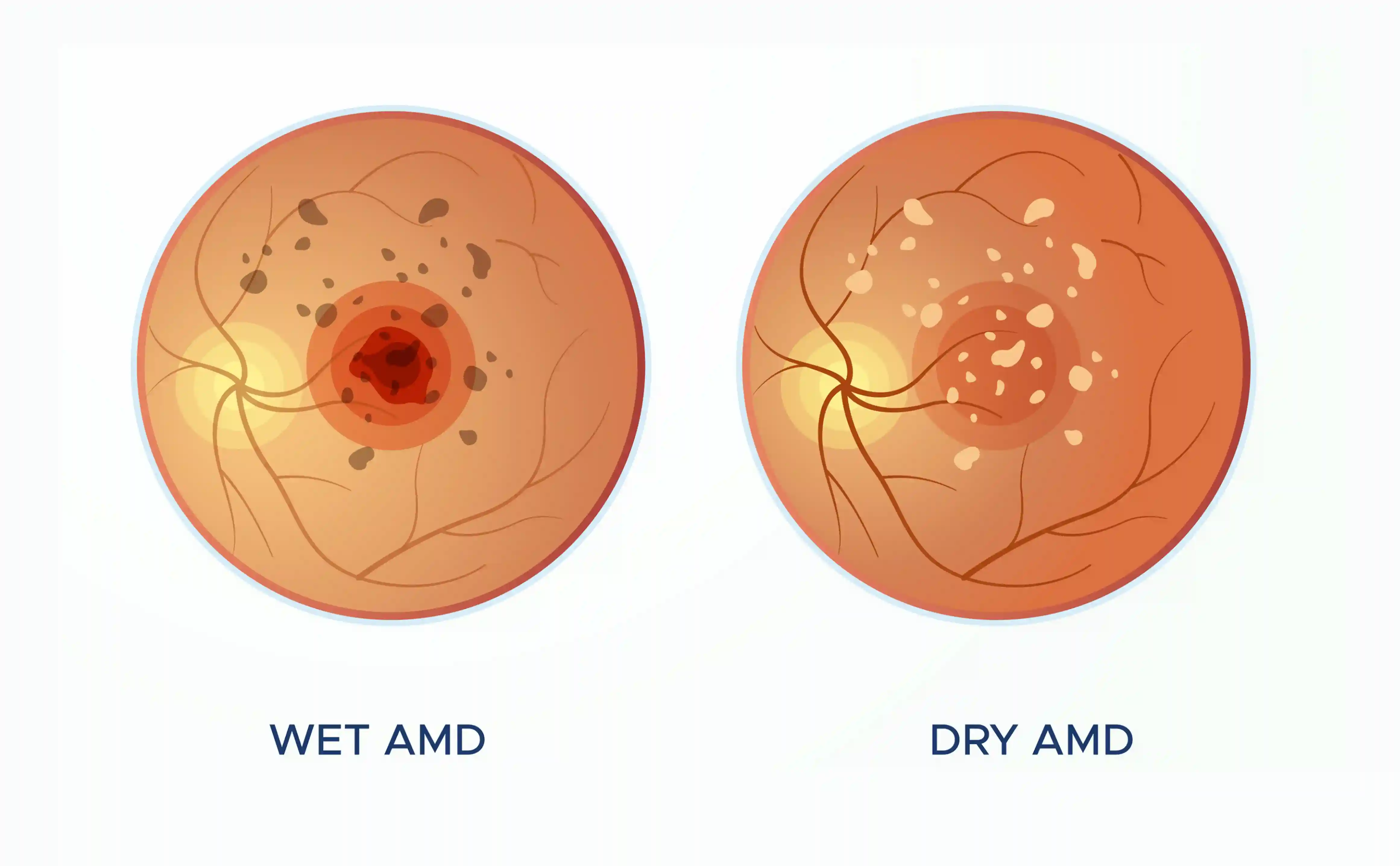
Wet AMD vs Dry AMD Symptoms
Both forms are progressive, but early detection and treatment can help preserve vision and slow the disease.
Dry AMD:
- Gradual vision changes
- Blurred central vision
- Difficulty reading
- Slow progression
Wet AMD
- Sudden or rapid vision loss
- Distorted or wavy lines
- Dark spots in central vision
- Faster progression
Wet AMD requires prompt treatment because vision can decline quickly.
How Is Dry AMD Diagnosed?
A retina specialist may perform:
- Dilated retinal examination
- Optical coherence tomography (OCT)
- Retinal imaging
- Visual acuity testing
These tests help identify drusen, assess retinal health, and determine the stage of dry AMD.
Treatment Options
Lifestyle Changes:
- Stop smoking
- Maintain healthy blood pressure
- Follow a balanced diet rich in leafy greens
- Exercise regularly
- Protect eyes from excessive UV exposure
Monitoring and Emerging Treatments
Regular follow-up visits allow specialists to monitor changes over time. New therapies for geographic atrophy are becoming available for selected patients.
Some patients also ask about dry macular degeneration injection treatments. Injectable therapies are primarily used for wet AMD, but newer treatments for advanced geographic atrophy associated with dry AMD are emerging and may be appropriate for certain patients.
Why Regular Retinal Exams Matter
Because dry AMD often develops gradually, symptoms may not be noticeable until significant retinal damage has occurred.
Routine retinal examinations can help identify progression early and allow specialists to monitor changes before substantial vision loss develops.
Conclusion
Dry AMD is a common retinal condition that can gradually affect central vision and interfere with everyday activities. While there is currently no cure, early diagnosis, healthy lifestyle choices, and appropriate monitoring can help slow progression and protect vision.
Understanding the symptoms, causes, stages, and treatment options for dry AMD allows patients to take a proactive role in maintaining their retinal health.
Expert Retina Care Matters
At phRETINA, in Nanuet, NY, Dr. Paul Hahn provides specialized diagnosis and treatment for dry AMD and other retinal conditions. Early detection and ongoing monitoring can help preserve vision and identify changes before significant vision loss occurs.
If you are experiencing changes in your central vision or have been diagnosed with dry AMD, a comprehensive retinal evaluation can help guide your care.
Frequently Asked Questions
-
What are the symptoms of dry AMD?
Common symptoms include blurred central vision, difficulty reading, reduced contrast sensitivity, and trouble recognizing faces. -
What are AMD stages?
AMD stages generally include early, intermediate, and advanced disease, with increasing retinal damage and vision changes over time. -
What is an atrophic ARMD?
Atrophic ARMD, also called geographic atrophy, is an advanced form of dry AMD in which retinal cells progressively deteriorate. -
Is dry macular degeneration injection treatment available?
Traditional injections are mainly used for wet AMD, but newer injectable treatments for geographic atrophy associated with dry AMD are becoming available for selected patients.