
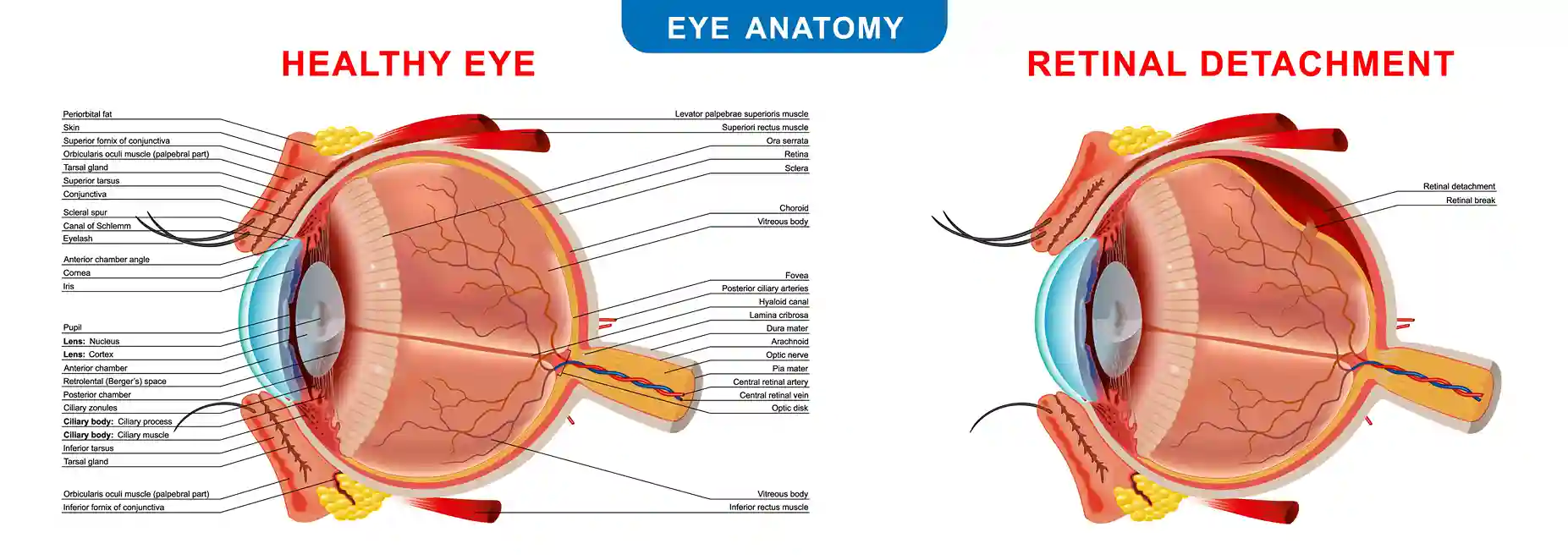
Retinal separation sounds serious because it is. Often referred to as retinal detachment, retinal separation occurs when the retina pulls away from the back of the eye. Since the retina is responsible for capturing light and sending visual signals to the brain, any disruption can directly affect vision.
So can retinal separation cause blindness? Yes, it can. But the outcome depends heavily on timing. Early diagnosis and treatment can preserve vision. Delays increase the risk of permanent damage. Checkout this blog for more.
What Happens During Retinal Separation
The retina relies on a steady supply of oxygen and nutrients from underlying layers. When retinal separation occurs, that connection is disrupted. Without support, retinal cells begin to lose function quickly.
At first, this may affect only a small area. But if the separation spreads, central vision can become involved. Once the macula is affected, the risk of long-term vision loss increases significantly.
This is why retinal separation is considered a medical emergency, not something to monitor casually.
Early Signs Retinal Detachment Should Never Be Ignored
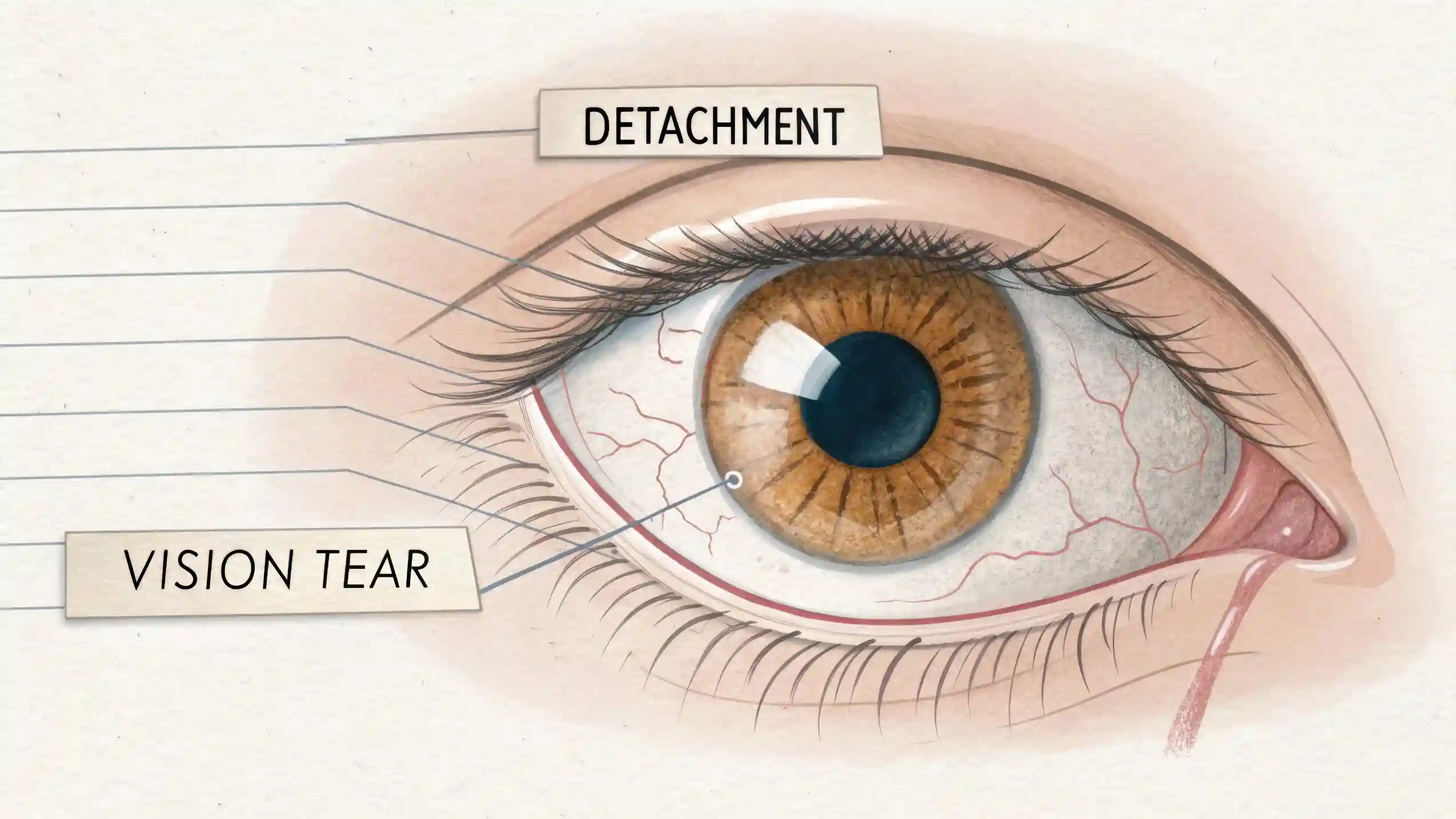
Retinal separation often gives warning signs before severe damage occurs. Recognizing these early signs of retinal detachment can make the difference between recovery and permanent vision loss.
Common symptoms include:
- Seeing flashes of light when eyes are closed or in dim settings
- Sudden increase in floaters
- A shadow in vision that moves or expands
- Curtain vision loss, where a dark area spreads across sight
- Blurred or distorted central vision
These symptoms may appear suddenly or worsen over hours to days. Any of these signs should prompt immediate evaluation by a detached retina specialist.
Why Retinal Separation Can Lead to Blindness
The longer the retina remains detached, the more damage occurs at a cellular level. Photoreceptor cells are highly sensitive and do not regenerate effectively.
If retinal separation is not treated:
- Vision becomes progressively blurred
- Central vision may be permanently affected
- Full blindness can occur in severe cases
Research shows that outcomes are significantly better when treatment is performed before the macula detaches. Once central vision is involved, recovery becomes less predictable.
This is why timing matters more than anything else.
What Causes Retinal Separation
There are several possible causes behind retinal separation.
Common detached retina cause factors include:
- Age related changes in the vitreous gel
- High myopia
- Eye trauma
- Previous eye surgery
- Diabetic retinal problems
As the vitreous shrinks with age, it can pull on the retina and create a tear. Once a tear forms, fluid can pass underneath, leading to separation.
How Retinal Separation Is Treated
Retinal separation requires urgent medical care. The type of treatment depends on severity.
For small tears detected early:
- Laser treatment can seal the tear
- Cryotherapy may be used to stabilize the retina
For full detachment:
- Vitrectomy is commonly performed to remove vitreous traction
- A gas or silicone oil bubble is used to hold the retina in place
- Scleral buckle surgery may be used to support the eye wall
Vitrectomy is one of the most effective procedures and is widely used in emergency eye surgery for retinal detachment.
The goal of all treatments is to reattach the retina and restore its function as quickly as possible. Checkout the aftermath of retina surgery.
Recovery and Visual Outcomes
Recovery depends on how quickly treatment is performed and whether central vision was affected.
If treated early:
- Vision may return close to normal
- Distortion may be minimal
If treatment is delayed:
- Central vision may remain blurred
- Some permanent vision loss may occur
Patients often notice gradual improvement over weeks or months after surgery. However, the retina does not always fully recover if damage was severe.
When to Seek Immediate Help
Retinal separation is not a wait-and-watch condition. Immediate care is critical.
Seek help if you experience:
- Sudden flashes of light
- New floaters or spots
- A shadow in vision
- Curtain vision loss
- Rapid change in central vision
A detached retina specialist can evaluate the retina and determine if emergency eye surgery is needed.
The Bigger Picture
Retinal separation is one of the most urgent retinal problems because of how quickly it can progress. The connection between timing and outcome is clear. Early intervention can preserve vision. Delays increase the risk of blindness.
The good news is that modern treatments, including vitrectomy and other surgical techniques, have high success rates when performed promptly. Blindness treatment in this context is not about reversing damage later. It is about preventing it in the first place.
If something suddenly feels off in your vision, especially flashes, shadows, or curtain-like loss, trust that signal. The retina does not give second chances easily. Acting fast is what protects sight.