
Vision loss does not always happen suddenly. Many eye conditions that cause blindness develop gradually, with subtle symptoms that are easy to overlook. Others progress rapidly and require immediate medical attention to prevent permanent damage.
Many of these conditions affect the retina, the light-sensitive tissue at the back of the eye that plays a critical role in vision. Recognizing early warning signs and seeking timely care can make a significant difference in preserving eyesight.
At phRETINA, Dr. Paul Hahn provides specialized retinal care for patients in Nanuet, NY, using advanced diagnostic technology to identify retinal diseases and develop personalized treatment plans.
What Eye Conditions Can Cause Blindness?
Several eye diseases have the potential to cause permanent vision loss if left untreated. While not every condition leads to blindness, early diagnosis often improves treatment outcomes.
Some of the most common eye conditions that cause blindness include:
- Diabetic retinopathy
- Retinal detachment
- Retinal tears
- Age-related macular degeneration
- Retinal vein occlusion
- Advanced glaucoma
- Certain inherited retinal diseases
Many of these conditions begin with mild vision changes before progressing to more significant retina eyesight problems.
Common Retinal Diseases That Can Threaten Vision
Diabetic Retinopathy
Diabetic retinopathy develops when high blood sugar damages the small blood vessels within the retina. In its early stages, symptoms may be absent, making routine eye examinations especially important for people with diabetes.
As the disease progresses, patients may notice blurred vision, floaters, or dark spots caused by retinal damage.
Retinal Detachment
A retinal detachment occurs when the retina separates from the back of the eye, cutting off its blood supply. This condition requires prompt treatment to help preserve vision.
Warning signs often include flashes of light, a sudden increase in floaters, or a dark curtain moving across your field of vision.
Retinal Tears
Retinal tears often occur when the vitreous pulls on the retina as part of the natural aging process.
Common retinal tear causes include:
- Posterior vitreous detachment
- Eye injuries
- Severe nearsightedness
- Previous eye surgery
Without treatment, a retinal tear may progress to retinal detachment.
Age-Related Macular Degeneration
Wet age-related macular degeneration affects central vision by causing abnormal blood vessels to grow beneath the retina. Patients often notice distorted vision, difficulty reading, or dark spots in their central vision.
Retinal Vein Occlusion
A blocked retinal vein can reduce blood flow and lead to bleeding or swelling within the retina. Depending on the severity, it may cause blurred vision or sudden vision loss.
Retinal Problems Symptoms You Should Never Ignore
Recognizing retinal problems symptoms early gives your eye care team the best opportunity to diagnose and treat retinal disease before vision loss occurs.
Seek prompt evaluation if you experience:
- Sudden flashes of light
- A sudden increase in floaters
- Blurred or distorted vision
- Dark spots in your central vision
- A curtain or shadow over part of your vision
- Loss of peripheral vision
- Sudden changes in color perception
These symptoms of retinal disorders may indicate a serious retinal condition requiring immediate attention.
Signs of Retinal Damage
The symptoms of retinal damage vary depending on the underlying condition and the part of the retina affected.
Common retinal damage symptoms include:
- Blurred vision
- Difficulty reading
- Distorted straight lines
- Reduced night vision
- Blind spots
- Floaters
- Flashes of light
If you notice any symptoms of retinal damage, scheduling a comprehensive retinal evaluation is an important first step toward protecting your eyesight.
What Are Retinal Holes?
A retinal hole is a small opening in the retina that may develop as the vitreous gel changes with age.
Some people have no symptoms, while others experience retinal hole symptoms such as:
- New floaters
- Flashes of light
- Blurred vision
Although not every retinal hole leads to retinal detachment, early diagnosis helps determine whether treatment is necessary.
Eye Retinal Diseases and How They're Diagnosed
There are many eye retinal diseases, each affecting the retina in different ways. Some develop slowly over time, while others require urgent treatment to prevent permanent vision loss.
A retinal diseases list commonly includes:
- Diabetic retinopathy
- Age-related macular degeneration
- Retinal tears
- Retinal detachment
- Retinal vein occlusion
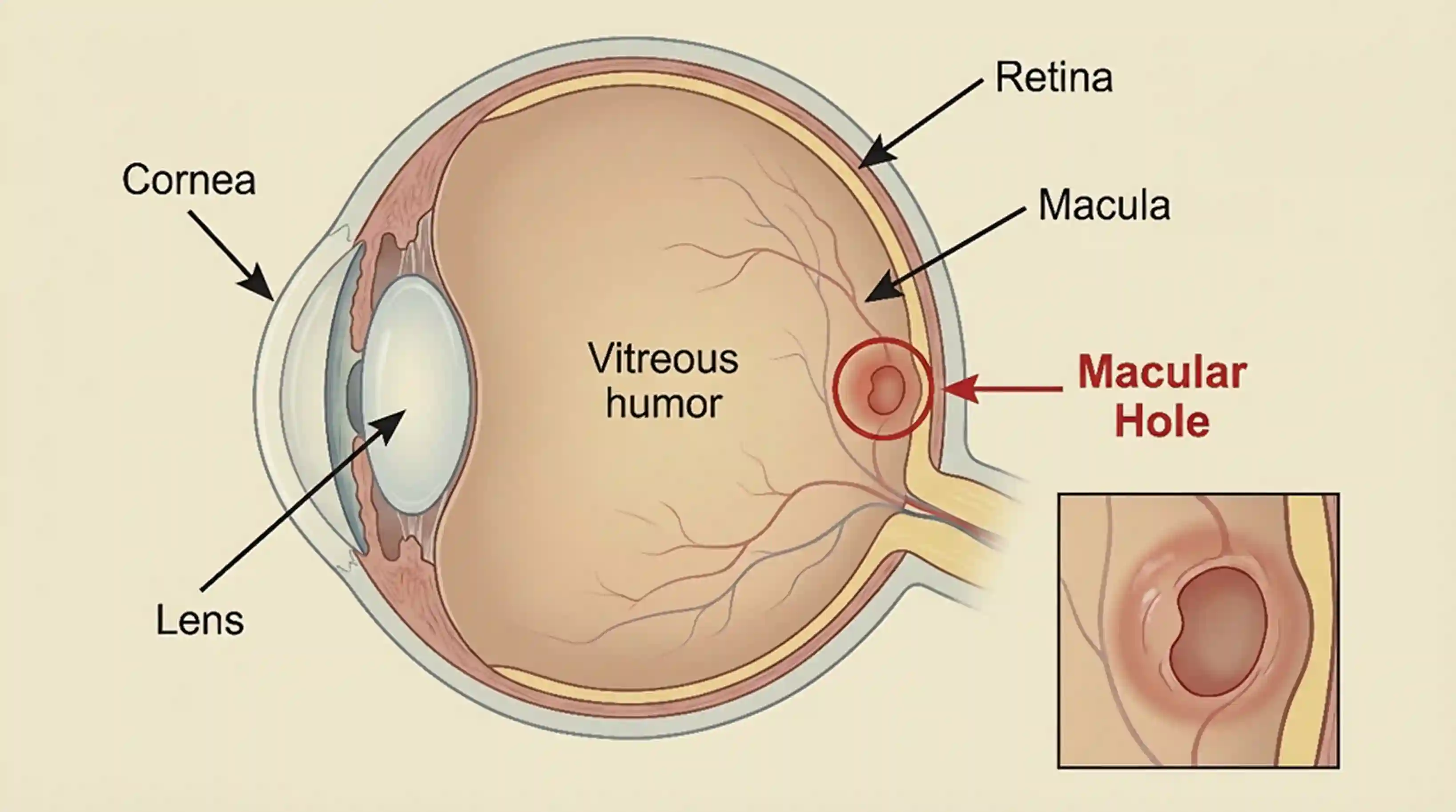
- Macular holes
- Epiretinal membrane
- Inherited retinal disorders
If you are experiencing an eye problem retina related symptoms, our retina specialist may recommend a comprehensive evaluation to determine the underlying cause.
Your examination may include:
- A comprehensive eye examination
- Dilated retinal examination
- Optical Coherence Tomography (OCT)
- Retinal imaging
- Fundus photography
- Fluorescein angiography, when appropriate
These advanced diagnostic tools help identify retinal disease, assess the extent of retinal damage, and guide the most appropriate treatment plan.
Can Blindness Be Prevented?
Not every retinal condition can be prevented, but many diseases that causes blindness can be managed successfully when diagnosed early.
Regular eye examinations are particularly important if you:
- Have diabetes
- Are over age 50
- Have high blood pressure
- Have a family history of retinal disease
- Notice new vision changes
Early diagnosis allows treatment to begin before retinal disease blindness develops in many cases.
When Should You Schedule a Retinal Evaluation?
Many retinal diseases share similar warning signs, making it difficult to identify the cause without a thorough examination.
Schedule an evaluation if you notice:
- New flashes or floaters
- Sudden blurred vision
- Distorted central vision
- Loss of side vision
- A shadow or curtain across your vision
- Persistent eye vision problem symptoms
- New or worsening eyesight problem symptoms
Prompt evaluation can help identify the cause and determine whether treatment is needed.
Conclusion
Many eye conditions that cause blindness begin with subtle vision changes that are easy to dismiss. Whether it's new floaters, flashes of light, blurred vision, or distorted central vision, recognizing these symptoms early can lead to timely diagnosis and treatment.
Because many retinal conditions share similar warning signs, a comprehensive retinal evaluation is the most effective way to determine the cause of your symptoms and protect your long-term vision. At phRETINA, Dr. Paul Hahn combines advanced diagnostic technology with personalized retinal care to help patients in Nanuet, NY, manage a wide range of retinal diseases.
Frequently Asked Questions
-
Which eye conditions are most likely to cause blindness?
Several eye conditions that cause blindness involve the retina, including diabetic retinopathy, retinal detachment, age-related macular degeneration, and retinal vein occlusion. Early diagnosis and treatment can help reduce the risk of permanent vision loss. -
What are the early symptoms of retinal disease?
Common symptoms of retinal disorders include flashes of light, floaters, blurred vision, distorted vision, blind spots, and a shadow across part of your vision. Any sudden change in vision should be evaluated promptly. -
Can retinal damage be reversed?
Some forms of retinal damage can be treated or managed, but treatment depends on the underlying condition. Early intervention often leads to better outcomes than waiting until symptoms become severe. -
Are retinal tears always an emergency?
A retinal tear should be evaluated as soon as possible because it may progress to retinal detachment, a sight-threatening condition that often requires urgent treatment. -
Who is at higher risk for retinal disease?
People with diabetes, high blood pressure, severe nearsightedness, a family history of retinal disease, or those over age 50 have a higher risk of developing certain retinal conditions.