
If straight door frames, text lines, or tiles suddenly look bent or uneven, something structural may be happening inside the eye. One common cause of wavy lines in vision is an epiretinal membrane.
An epiretinal membrane is a thin layer of scar like tissue that forms on the surface of the retina. More specifically, it develops over the macula, the central part of the retina responsible for detailed vision. When this membrane contracts, it wrinkles the underlying retinal in eye tissue, leading to distortion.

Let’s unpack what that means and why it affects vision the way it does.
What Is the Retina and Why Does It Matter?
Before understanding epiretinal membrane, it helps to answer a basic question: what is retinal tissue?
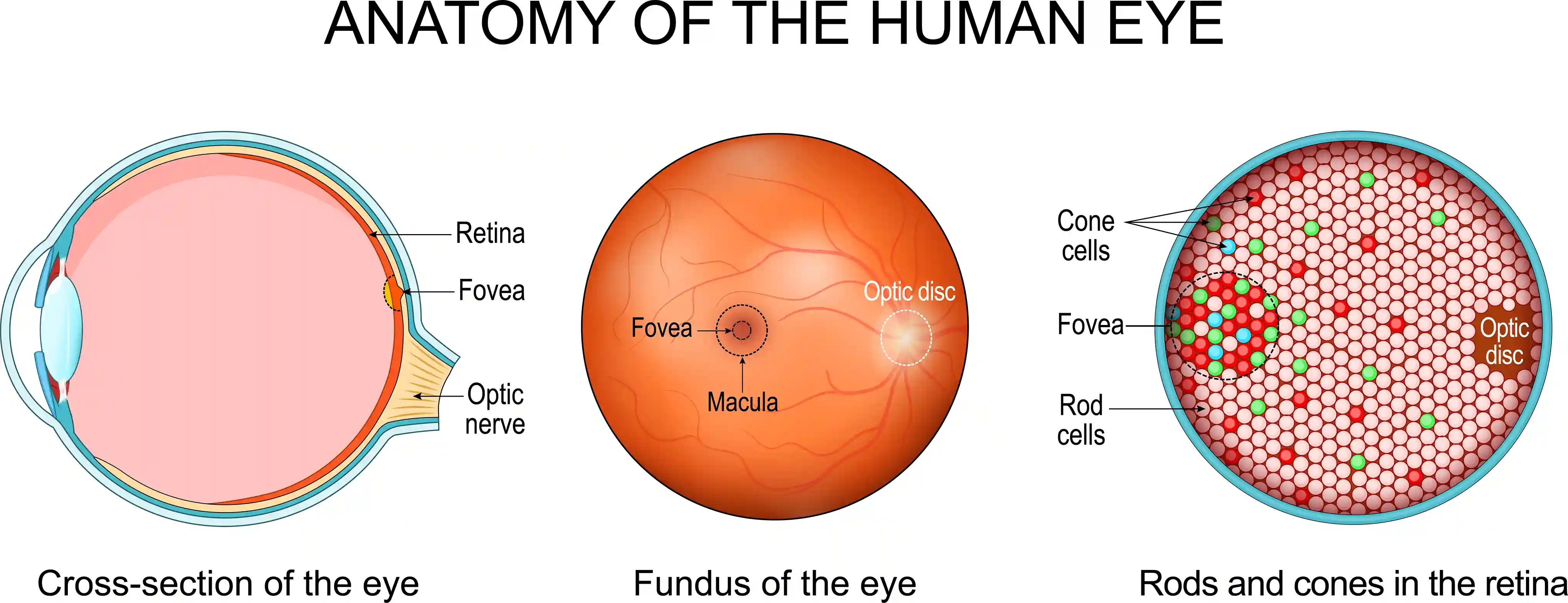
The retina is a thin, light sensitive layer at the back of the eye. It converts light into electrical signals that travel to the brain. The macula, located in the center of the retina, handles sharp central vision needed for reading, driving, and recognizing faces.
When something pulls or distorts the macula, vision distortion follows. The retina does not tolerate mechanical stress well. Even small surface changes can alter how light is processed.
What Is an Epiretinal Membrane?
An epiretinal membrane, sometimes mistakenly referred to as an epithelial membrane, is not part of the normal eye structure. It is scar tissue that forms on the macular surface.
It often develops after natural aging changes in the vitreous gel. As the vitreous shrinks and separates from the retina, microscopic irritation can stimulate cell growth on the macula. That growth forms a thin, semi transparent layer.
In some cases, the membrane remains mild and stable. In others, it tightens and contracts. When it contracts, it creates tension on the retina. That tension is what causes wavy vision.
This condition is also commonly called ERM eye in clinical settings.
Why Do Straight Lines Look Wavy?
The explanation is mechanical. Imagine placing plastic wrap over a smooth surface and then gently tightening it. Wrinkles form underneath. The same concept applies to the macula.
As the epiretinal membrane contracts:
- The macular surface puckers
- Light hits uneven retinal tissue
- Signals to the brain become distorted
The result is vision distortion. Straight lines appear bent. Letters may look stretched or compressed. Some people describe it as looking through rippled glass.
This is one of the most classic epiretinal membrane symptoms.
Common Symptoms of Epiretinal Membrane
Symptoms can range from subtle to significant. They often develop gradually.
Common signs include:
- Wavy lines in vision
- Blurry central vision
- Difficulty reading small print
- Objects appearing smaller or larger than they are
- Mild central shadowing
Peripheral vision usually remains normal. That is why many people delay evaluation. They can still navigate rooms, but reading becomes frustrating.
When epiretinal membrane causes significant vision changes, daily tasks become harder.
ERM Outside Macula
Not all membranes form directly over the central macula. ERM outside macula may exist without causing major visual symptoms. If the membrane is away from the central visual axis, distortion may be minimal.
However, membranes can progress. A retina specialist monitors these cases to ensure they do not begin affecting central vision.
Location determines symptom severity.
Does Epiretinal Membrane Cause Permanent Vision Damage?
In mild cases, vision damage may be minimal. Many patients maintain stable sight for years without intervention.
However, if contraction continues, the pulling force can lead to increasing distortion. Chronic traction can thicken or swell the macula, worsening visual clarity.
The key factor is progression. Stable membranes are often observed. Progressive ones require intervention.
How Is Epiretinal Membrane Diagnosed?
Diagnosis involves a dilated retinal examination and specialized imaging. Optical coherence tomography creates a detailed cross sectional image of the macula. This allows the retina specialist to see the membrane and measure retinal distortion.
Imaging shows whether the retinal in eye layers are being pulled or thickened. The structural detail helps guide treatment decisions.
When Is ERM Surgery Needed?
Not every epiretinal membrane requires surgery. Treatment depends on symptom severity and functional impact.
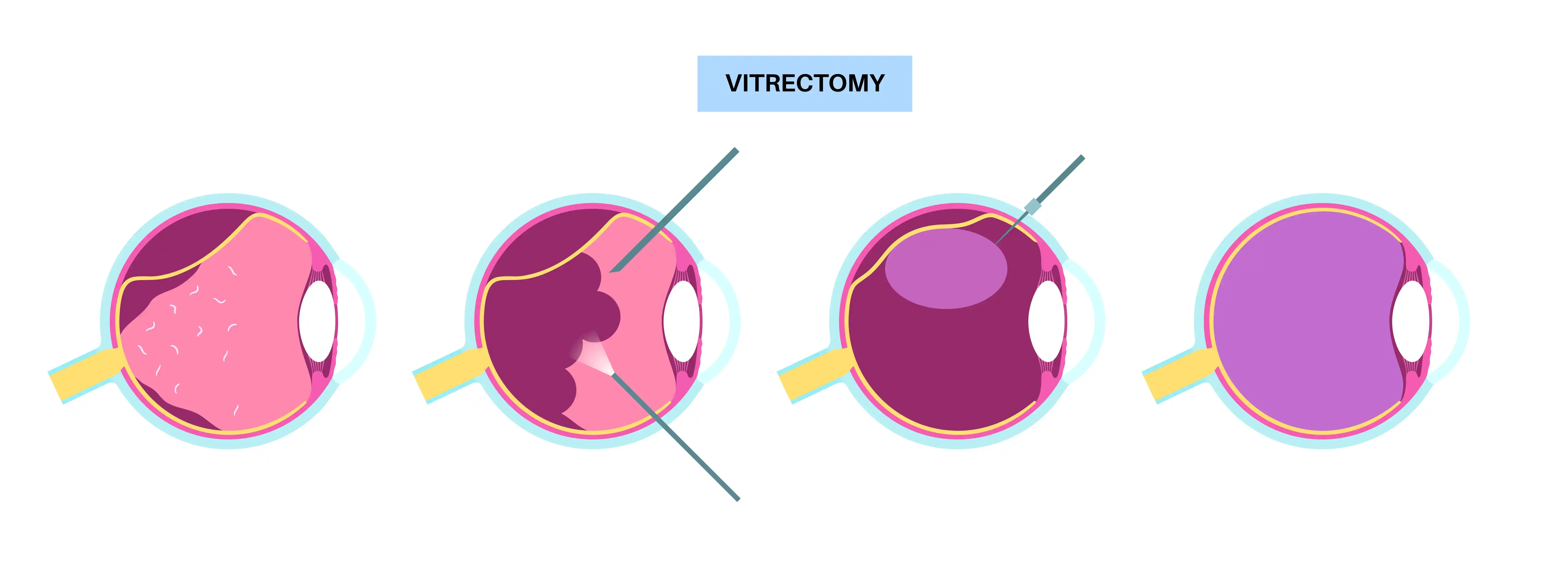
ERM surgery, known as vitrectomy with membrane peel, is considered when:
- Vision distortion interferes with daily life
- Reading becomes significantly impaired
- Vision declines progressively
- Imaging shows worsening traction
During ERM surgery, the vitreous gel is removed and the membrane is carefully peeled from the macula. This relieves traction and allows the retina to relax.
Recovery takes time. Vision may improve gradually over months. Some distortion may persist, especially if the membrane was present for a long period before surgery.
The Bigger Picture
Epiretinal membrane is a structural condition, not an infection or inflammatory disease. It is mechanical tension on delicate retinal tissue.
If straight lines look wavy, it is a signal. The retina communicates through distortion, not pain. Wavy vision is not something to dismiss as “just aging.” It warrants proper evaluation.
Pay attention to visual changes. When lines bend, your retina may be asking for attention.