
A detached retina is one of the most serious eye conditions because it can lead to permanent vision loss if not treated promptly. While many people are familiar with the condition, fewer understand the detached retina cause or recognize the early warning signs that require immediate attention.
In many cases, retinal detachment begins with a small retinal tear that allows fluid to collect beneath the retina, causing it to separate from the back of the eye. Recognizing these changes early gives our retina specialist the best opportunity to preserve your vision.

What Is a Detached Retina?
The retina is a thin layer of light-sensitive tissue located at the back of the eye. It captures light and sends visual signals to the brain, allowing you to see clearly.
A retinal detachment occurs when the retina separates from the tissue beneath it. Once detached, the retina no longer receives the oxygen and nutrients it needs to function properly. Without timely treatment, permanent vision loss may occur.
Understanding the detached retina cause is the first step toward recognizing when symptoms require urgent evaluation.
What Is the Most Common Detached Retina Cause?
Many patients ask, what is the most common cause of retinal detachment?
The most common cause is a retinal tear that develops as the vitreous gel inside the eye naturally shrinks with age. As the vitreous pulls away from the retina, it can create a tear. Fluid may then pass through the opening and lift the retina away from the back of the eye.
Although aging is the leading risk factor, several other conditions can increase the likelihood of retinal detachment.
These include:
- Severe nearsightedness (myopia)
- Previous cataract surgery
- Eye trauma
- A history of retinal detachment in the other eye
- Certain inherited retinal conditions
- Diabetes with advanced retinal disease
Identifying the underlying detached retina cause helps determine the most appropriate treatment and reduce the risk of further retinal damage.
What Causes a Retinal Tear?
A retinal tear is often the first step before a retinal detachment develops.
Many patients wonder what causes a torn retina or how does a retinal tear happen.
The vitreous gel naturally changes as we age. As it shrinks, it may pull on the retina. If the traction is strong enough, it can create a small tear.
Other factors that answer what can cause a retinal tear include:
- Eye injuries
- High myopia
- Previous retinal surgery
- Lattice degeneration
- Certain inherited retinal disorders
Not every retinal tear progresses to retinal detachment, but every retinal tear should be evaluated promptly.
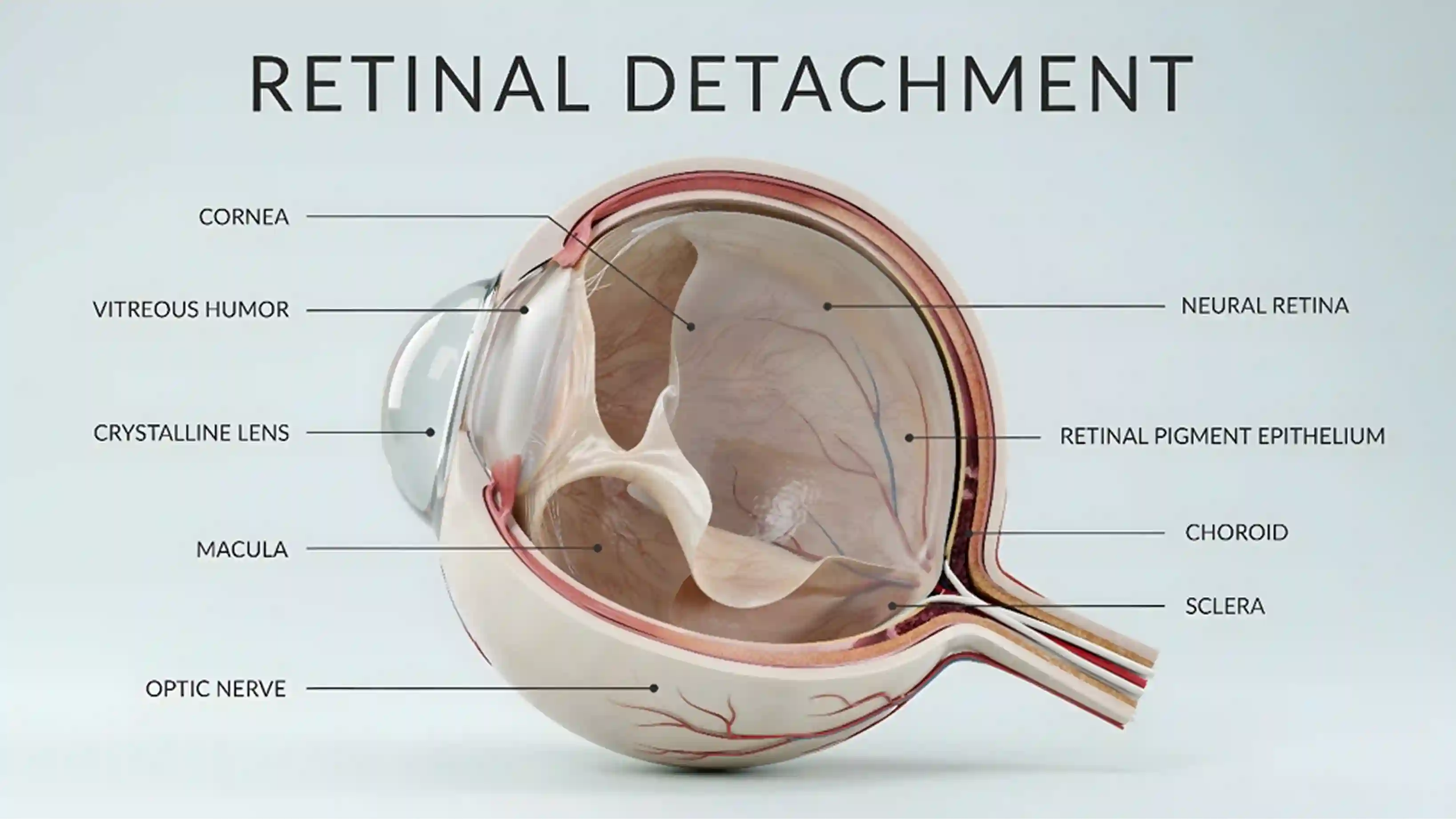
Retinal Detachment vs Tear
Understanding retinal detachment vs tear can help explain why prompt diagnosis is so important.
A retinal tear is a small break in the retina. At this stage, the retina remains attached, but fluid may pass through the tear.
A retinal detachment occurs when that fluid collects beneath the retina, causing it to separate from the underlying tissue. Because retinal detachment interrupts the retina's normal function, it is considered a medical emergency.
Early treatment of a retinal tear can often prevent retinal detachment from developing.
Early Signs of Retinal Detachment
Recognizing the early signs retinal detachment can help you seek treatment before permanent vision loss occurs.
Common warning signs include:
- A sudden increase in floaters
- Flashes of light
- Blurred vision
- Reduced side vision
- A shadow moving across your vision
These early symptoms retinal detachment may appear suddenly and should never be ignored.
How to Tell If You Have Retinal Detachment
Many people ask how to tell if you have retinal detachment.
One of the most recognizable symptoms is retinal detachment curtain vision, where a dark shadow or curtain appears to move across part of your visual field.
Other changes in detached retina vision may include:
- Sudden loss of peripheral vision
- Distorted vision
- Blurred vision that worsens quickly
- Difficulty seeing in one area of your field of vision
If you experience any of these symptoms, seek immediate retinal evaluation.
Does a Detached Retina Hurt?
A common question patients ask is, does a detached retina hurt?
In most cases, the answer is no. A detached retina is typically painless because the retina does not contain pain-sensitive nerve endings. Instead of discomfort, people usually notice sudden changes in their vision.
Because there is often no pain, symptoms such as new floaters, flashes of light, or a shadow in your vision should never be dismissed. Even painless vision changes may indicate a retinal emergency.
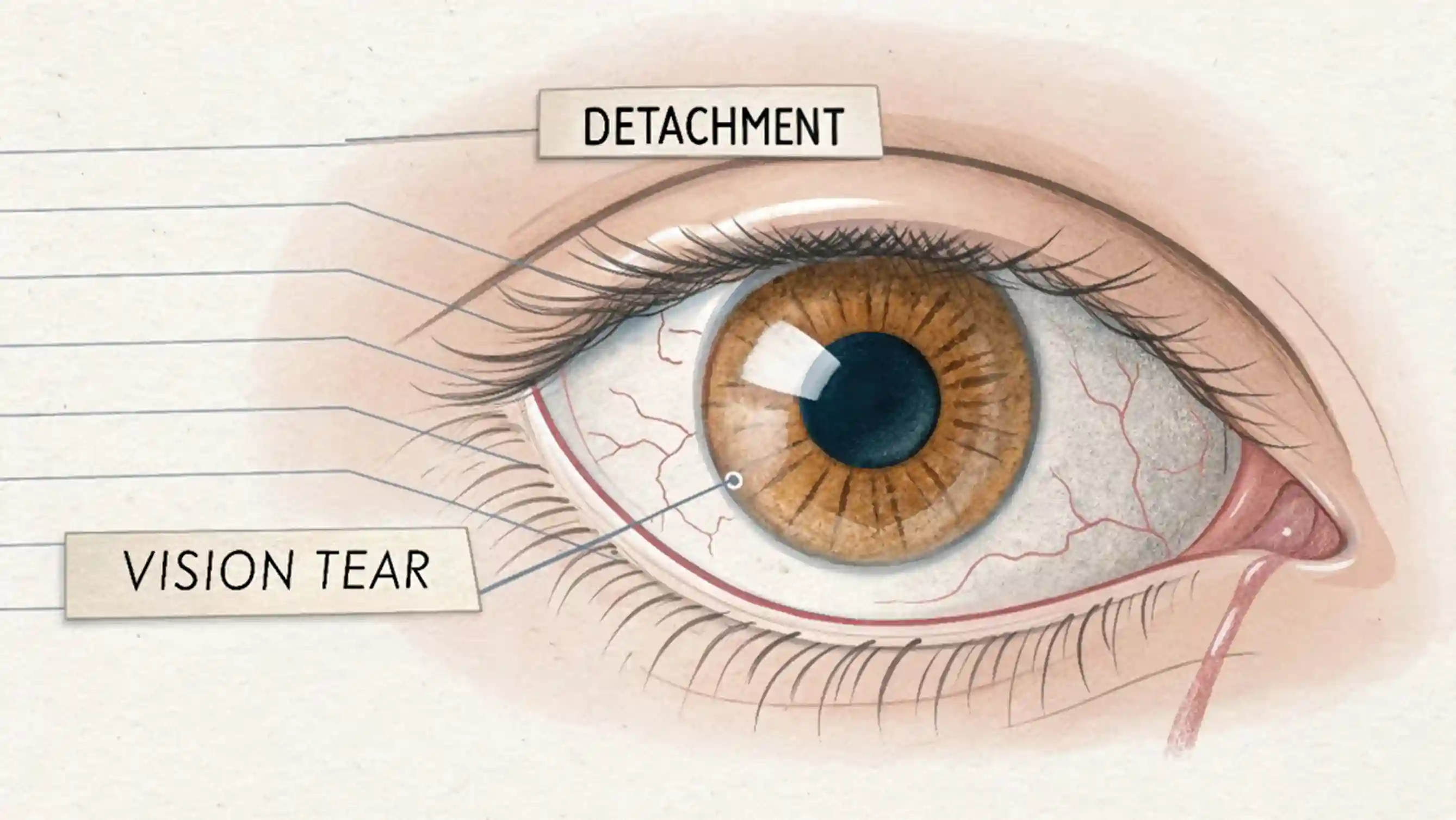
How Are Retinal Tears and Detachments Diagnosed?
If you have symptoms suggesting a retinal tear or detachment, a prompt retinal examination is essential.
At phRETINA, Dr. Paul Hahn performs a comprehensive retinal evaluation using advanced diagnostic technology to identify the cause of your symptoms and determine the most appropriate treatment.
Your evaluation may include:
- A dilated retinal examination
- Retinal imaging
- Optical Coherence Tomography (OCT), when appropriate
- Ocular ultrasound if the retina cannot be clearly visualized
These tests allow our retina specialist to detect retinal tears, assess retinal damage, and determine whether the retina has detached.
How to Prevent Detached Retina
While not every detached retina cause can be prevented, there are steps that may help lower your risk or improve the chances of early detection.
These include:
- Schedule regular comprehensive eye examinations, especially after age 50.
- Seek immediate care for sudden flashes, floaters, or vision changes.
- Wear protective eyewear during sports or activities with a risk of eye injury.
- Manage diabetes and other medical conditions that can affect retinal health.
- Keep follow-up appointments if you have previously been diagnosed with a retinal tear or posterior vitreous detachment.
Although these measures cannot prevent every retinal detachment, they can help identify problems before they become more serious.
Conclusion
Understanding the detached retina cause can help you recognize symptoms early and seek timely care. While aging is the most common reason retinal tears develop, factors such as severe nearsightedness, eye injuries, previous eye surgery, and certain retinal conditions can also increase your risk.
If you notice flashes of light, a sudden increase in floaters, blurred vision, or the appearance of a curtain across your vision, do not wait for symptoms to improve. Prompt evaluation offers the best opportunity to preserve your sight and prevent permanent retinal damage.
At phRETINA, Retina Specialist Dr. Paul Hahn provides advanced diagnosis and treatment for retinal tears, retinal detachment, and other complex retinal conditions, helping patients throughout Nanuet, NY, receive timely, personalized retinal care.
Frequently Asked Questions
-
What is the most common detached retina cause?
The most common detached retina cause is a retinal tear that develops as the vitreous gel naturally separates from the retina with age. Fluid can then pass through the tear and cause the retina to detach. -
What does a retinal tear look like?
A retinal tear itself cannot be seen by looking in a mirror. Most people notice symptoms instead, such as flashes of light, new floaters, or blurred vision. A dilated retinal examination is needed to diagnose it. -
Can a retinal tear heal on its own?
No. A retinal tear typically does not heal without treatment. Early evaluation allows our retina specialist to determine whether laser treatment or another procedure is needed to reduce the risk of retinal detachment. -
What are the symptoms of a retinal tear or detachment?
Common retinal tear or detachment symptoms include sudden floaters, flashes of light, blurred vision, loss of side vision, and a dark curtain moving across your field of vision. These symptoms require prompt medical attention. -
Is retinal detachment always an emergency?
Yes. A retinal detachment is considered a medical emergency because delaying treatment increases the risk of permanent vision loss.