
A dark curtain in vision can be a frightening symptom, especially when it appears suddenly. Many patients describe it as a shadow, gray veil, or dark area that gradually moves across part of their sight. While some visual disturbances may be temporary, a dark curtain in vision should never be ignored because it can indicate a serious retinal condition.
One of the most concerning causes is retinal detachment, a sight-threatening emergency that occurs when the retina separates from the back of the eye. When this happens, patients may notice a curtain-like shadow, flashes of light, new floaters, or areas of missing vision. Understanding what a dark curtain in vision means, recognizing associated symptoms, and knowing when to seek care can help protect your vision and prevent permanent vision loss.

What Is a Dark Curtain in Vision?
A dark curtain in vision refers to the appearance of a shadow, gray area, or dark veil that partially blocks your sight. Some patients describe it as a curtain moving across their field of vision, while others notice a black or gray shadow that gradually expands.
A dark curtain in vision can affect one eye or both eyes and may develop suddenly or progressively. Because it can be a warning sign of retinal detachment or other serious retinal conditions, prompt evaluation is important.
What Causes Dark Curtains in Vision?
A dark curtain in vision symptom often occurs when part of the retina is no longer functioning normally. This can happen when the retina becomes torn, detached, or loses its blood supply.
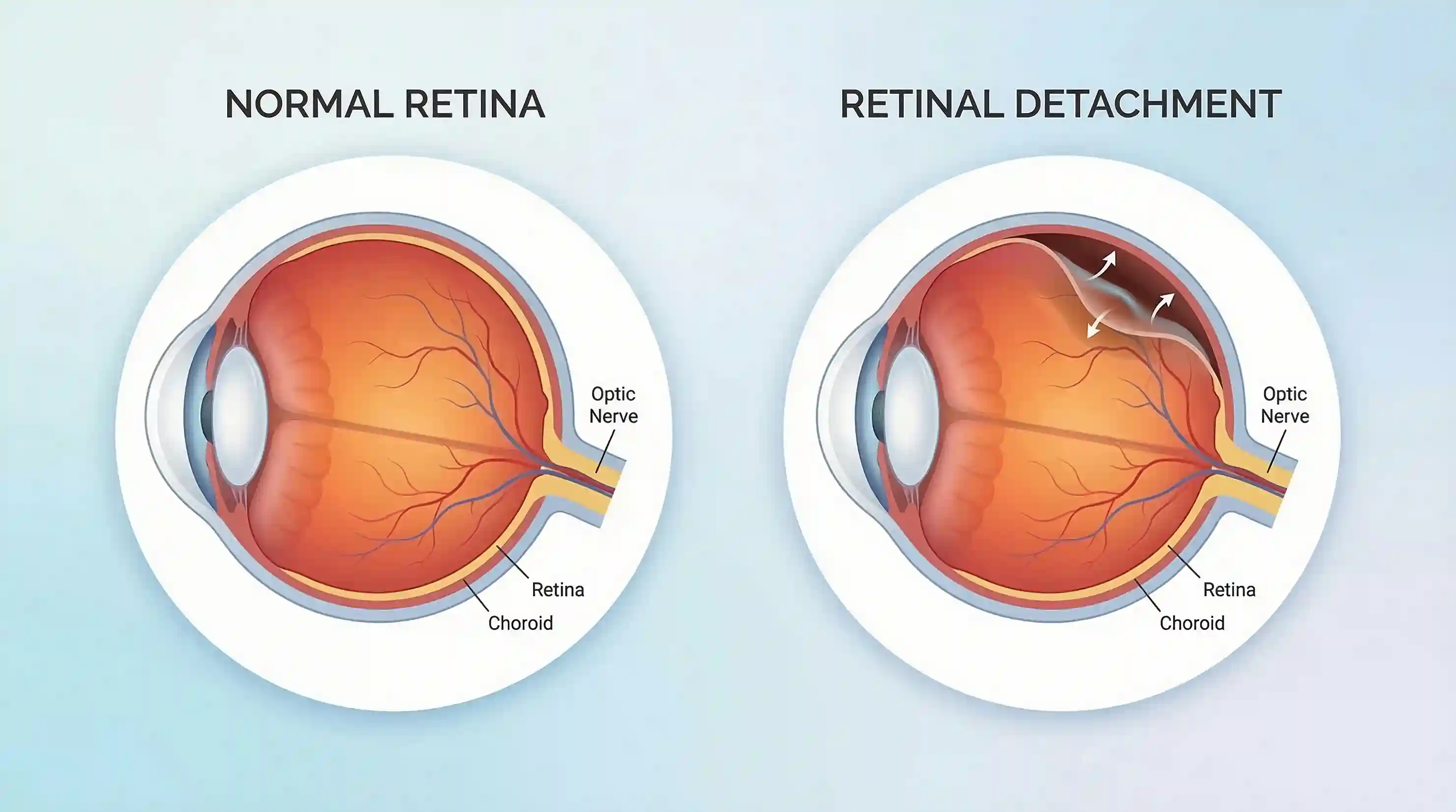
One of the most serious causes is retinal detachment. During a retinal detachment, the retina separates from the back wall of the eye, preventing it from receiving the oxygen and nutrients it needs to function properly.
As the detached area grows, patients may notice a curtain over vision that gradually spreads across part of their visual field.
Other possible causes include:
- Retinal tears
- Retinal vascular disease
- Vitreous hemorrhage
- Severe retinal inflammation
- Eye trauma
Regardless of the cause, dark curtain in vision should never be ignored.
What Does Dark Curtain in Vision Feel Like?
Patients describe it in different ways.
Common descriptions include:
- A shadow or dark curtain in vision moving from one side
- A black curtain in vision covering part of sight
- A gray curtain vision effect across peripheral vision
- Dark shadows in vision that seem to enlarge over time
- Curtain vision in one eye that develops suddenly
Unlike temporary blurriness, these symptoms often do not improve with blinking or rest.
Retinal Detachment and Curtain Vision Loss
Retinal detachment is considered a medical emergency.
When the retina pulls away from its normal position, visual signals can no longer be transmitted effectively to the brain. As a result, patients may experience curtain vision loss that worsens as more of the retina becomes detached.
Common warning signs include:
- Sudden flashes of light
- New floaters
- A sudden blind spot in vision
- Peripheral vision loss
Without prompt treatment, permanent vision loss can occur.
When Should You Seek Immediate Medical Attention?
You should contact a retina specialist immediately if you experience:
- A curtain over vision that continues to spread
- Flashes of light
- A sudden increase in floaters
- Sudden blind spot in vision
- New areas of missing vision
These symptoms may indicate retinal detachment or another serious retinal condition that requires urgent evaluation.

How Is Dark Curtain in Vision Diagnosed?
A comprehensive retinal examination is needed to determine the cause of a dark curtain in vision.
A retina specialist may perform:
- Dilated retinal examination
- Optical coherence tomography (OCT)
- Retinal imaging
- Ultrasound imaging when necessary
These tests help identify retinal tears, retinal detachment, bleeding, and other retinal abnormalities.
Treatment Options
Treatment depends on the underlying cause. For retinal tears, laser treatment or cryotherapy may be recommended to prevent progression.
If retinal detachment is present, surgical treatment is often required. Early intervention generally offers the best chance of preserving vision.
The sooner dark curtain in vision is evaluated, the greater the likelihood of a successful outcome.
The Bottom Line
Dark curtain in vision is not a symptom that should be ignored. Whether it appears as a shadow, a black curtain in vision, or a gradual curtain vision loss effect, it may indicate a serious retinal problem.
Because retinal detachment can lead to permanent vision loss, prompt evaluation is critical. Recognizing the warning signs and seeking immediate care can help protect your sight and prevent long-term complications.
Expert Retina Care Matters
At phRETINA in Nanuet, NY, Dr. Paul Hahn provides specialized diagnosis and treatment for retinal conditions, including retinal tears, retinal detachment, retinal vascular disease, and other sight-threatening disorders.
If you experience dark curtain in vision, flashes, floaters, or sudden changes in vision, a comprehensive retinal evaluation can help identify the cause and determine the most appropriate treatment.
Frequently Asked Questions
-
Is dark curtain in vision always caused by retinal detachment?
Not always. However, retinal detachment is one of the most serious causes of dark curtain in vision and should be ruled out immediately. -
What does a curtain over vision mean?
A curtain over vision often describes a shadow or area of vision loss that may occur when part of the retina becomes detached. -
Can dark curtain in vision go away on its own?
No. Any new dark curtain in vision symptom should be evaluated promptly because it may indicate a retinal emergency. -
Is curtained vision in one eye serious?
Yes. Curtain vision in one eye can be a warning sign of retinal detachment, retinal bleeding, or another serious retinal condition.